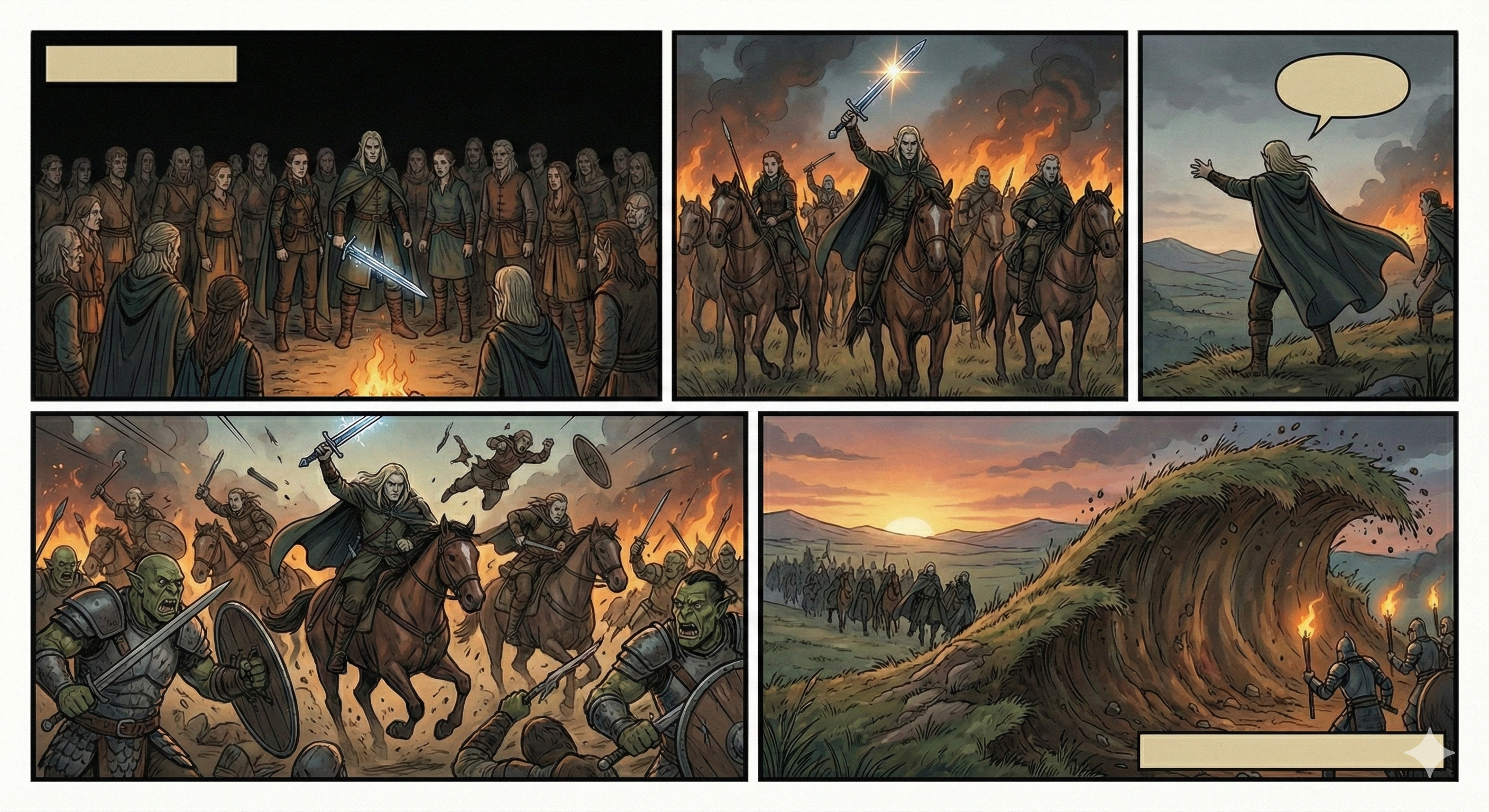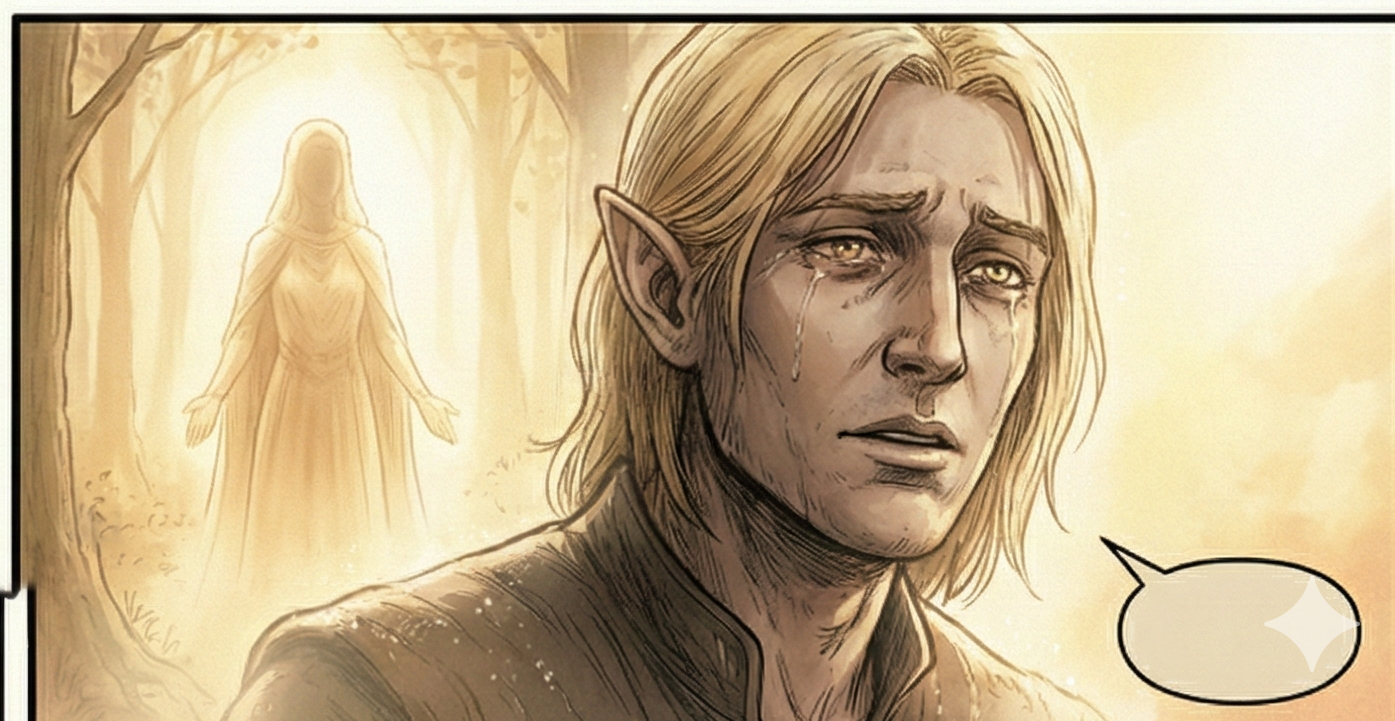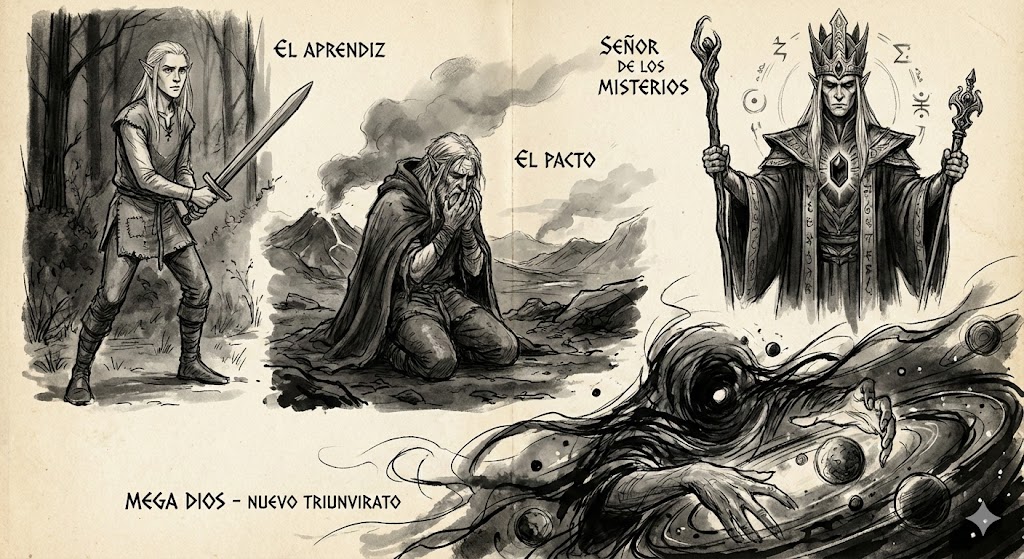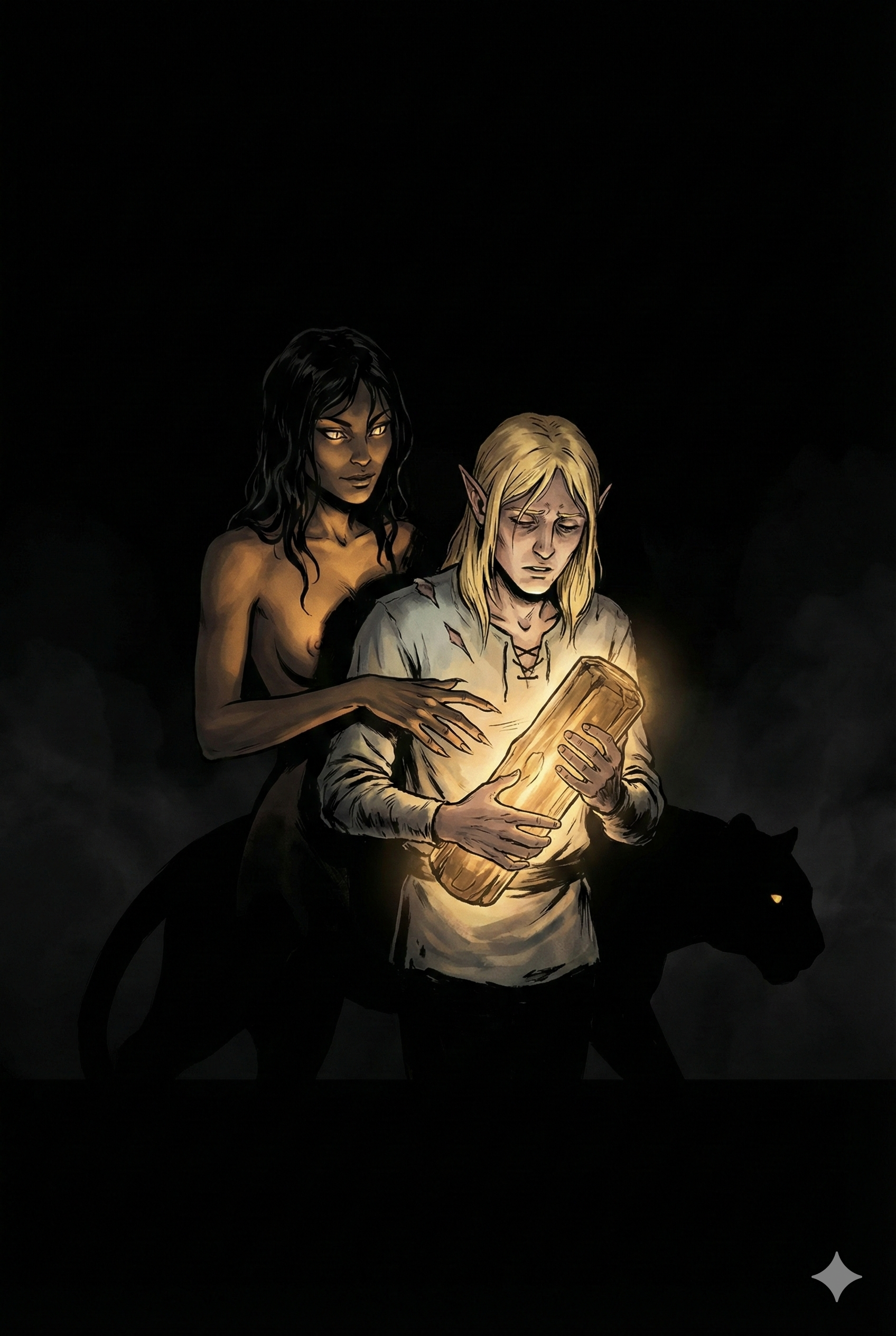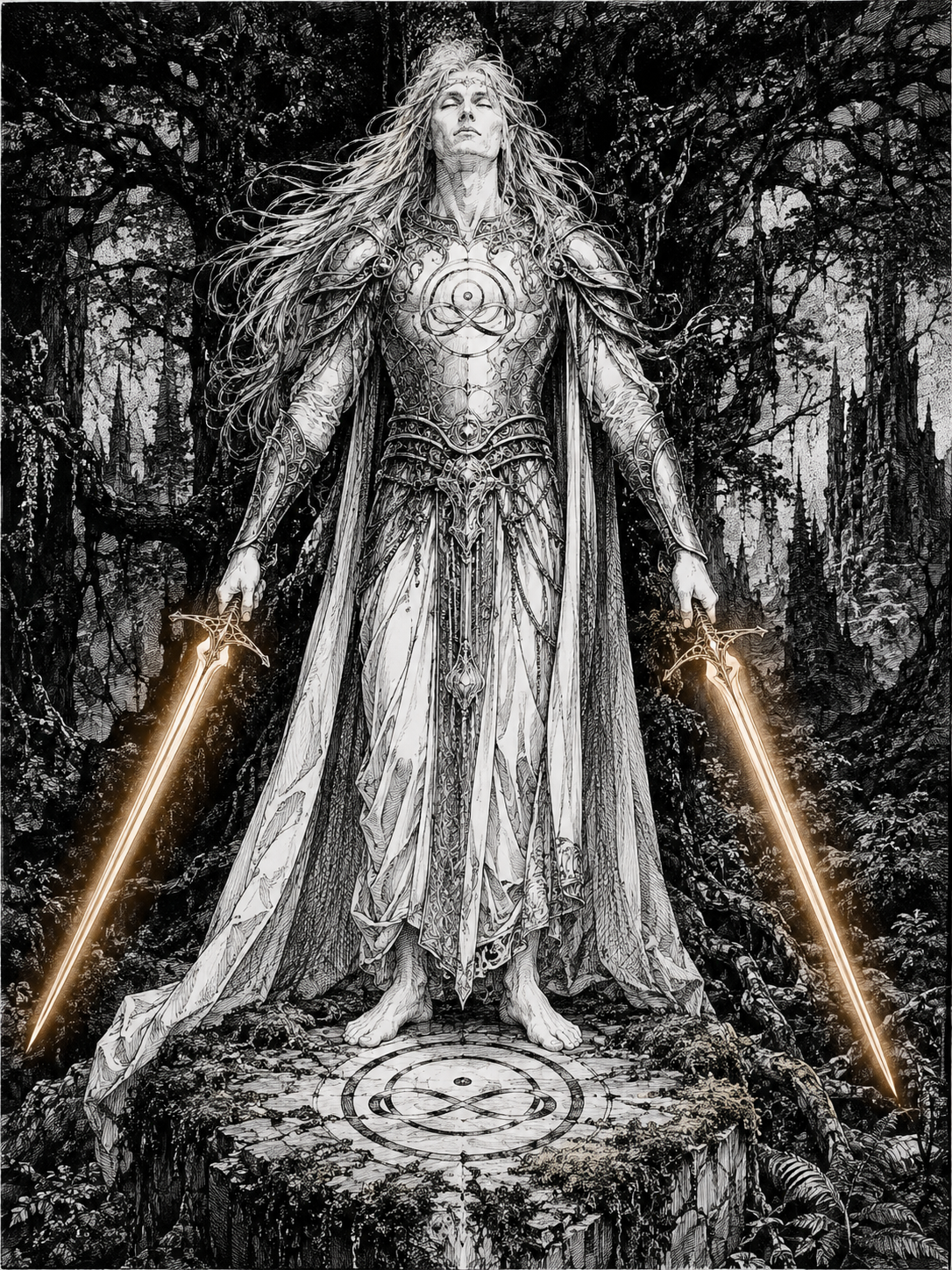
Arian is a cosmic power of dissolution and creation in Antiterra and, in Vala, a primordial elf worshiped as the god of magic and fantasy. He persists into the present cycle under the name of Caladan.
| Type | Character (elf; divinity) |
| Mother | Adara |
| Daughter | Thel |
| Grandson | Helter |
| Unacknowledged son | Matt |
| Teacher | Valteran |
| Spanish entry | Arian |
This name refers to different figures in 2 worlds; the versions are not merged.
In Antiterra
Arian is an architect and pact-maker and the bearer of the Rod of Infinity. He is one individual, yet a double of his once manifested as a separate entity. Some identify him with the universe itself.
Appearance and death
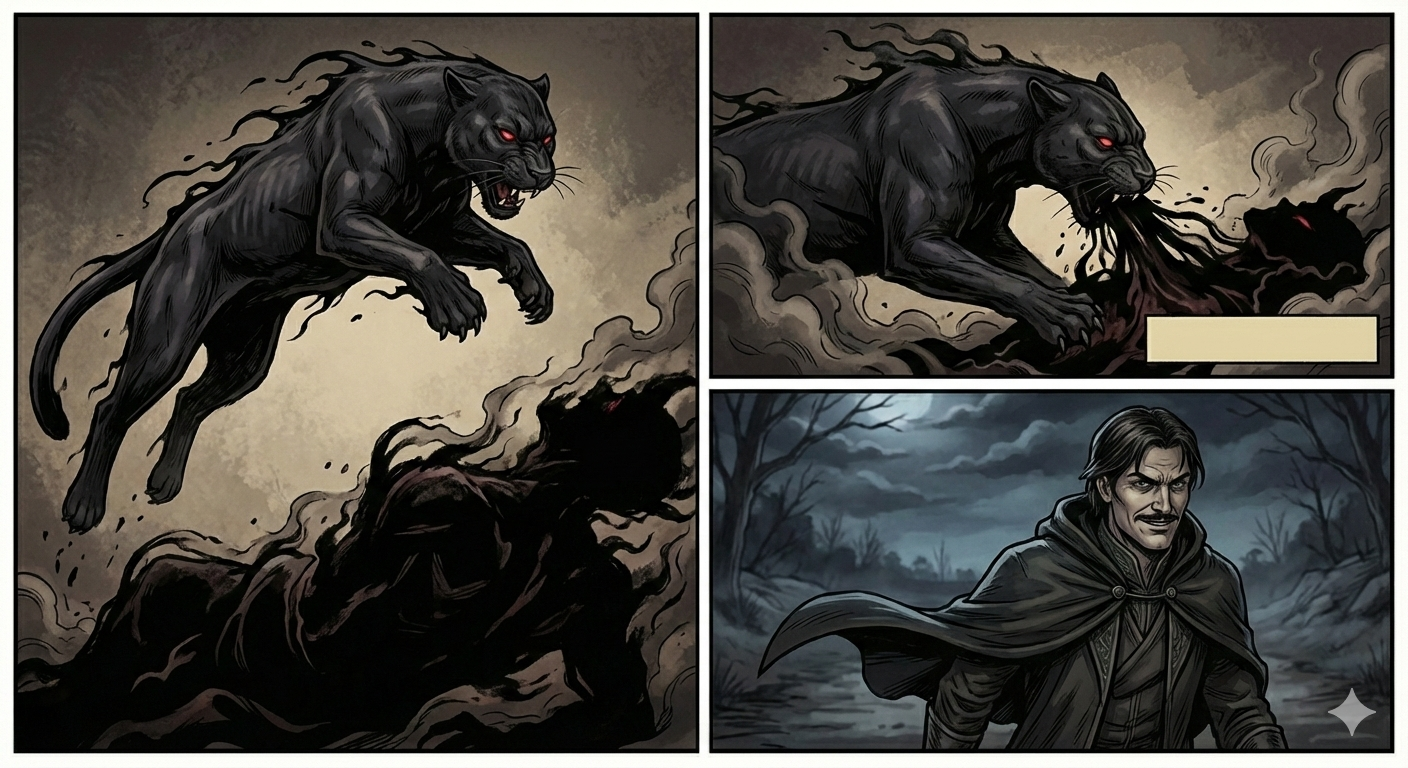
Tall. On the Astral Plane he wore a close-fitting leather jacket, a semi-reflective undershirt and a black tunic embroidered in gold and silver. In the alliance of beings of the lower planes, in 1570, he was “the one with the little mustache, the one at the back”.
When he dies he reappears elsewhere in the universe and is unavailable for one year.
Powers and limits
- With the Rod of Infinity he separated the gems. With the three artifacts reunited, “you can simply change the rules of the game”.
- When Asmodeus attacked him he could not strike back, because a pact he himself had made forbade it.
- He holds “the word in infinity” but admits he lacks the awareness to use it fully.
- The Stone of the Apocalypse escaped him twice. His failure as guardian led to Asmodeus’s attack, during which Alatea was eaten.
- A council of seven sages, all rather neutral (among them a manasaputra and aeons), guides his cosmic decisions.
Pacts and service
- Horateol: “a sort of deal” over the stone.
- Hecate, the White Goddess: a staged negotiation: a choice between the cycle of hell and a task; the “passive role of the spectator” during the event, with help in the reconstruction “once things are clean”; and the offer to become her “faithful and sincere worshiper”. They parted “for a while”. His choice determines whether “the goddess’s new word” reaches others.
- He worked as an architect for Union and built something for it. At the last moment he made amends by playing “a terrible game… suicide. The last experience”, and handed over the gem.
- He belonged to the Sacred Order, whose “great one” was lost.
Relationships
- With Graz’zt he speaks as an equal (“you and I are equals”): “two axes”, old antagonists who also learned to balance each other.
- His guide is Virgil, named alongside Dante and Faust.
- With Takishi he fathered Matt, “a sort of mix of atropal and cursed child”.
Mount Arian
In the land of dreams, past the hills of Tanaria, in or near Celefais, stands Mount Arian.
Conflicting accounts
- One account says Arian “God and Asmodeus” ended up fused; another, that he separated from God and Asmodeus. No order or mechanism is given.
Open questions
- Whether he is always the universe or became it.
- What the three artifacts are, and what he built for Union.
- Whether the double is an avatar, an involuntary split or a result of his way of dying.
- Who the “God” he separated from is; who named Mount Arian.
In Vala
A priestly prophecy sets his measure: «Aunque las estrellas sufrieran, Arian salvaría» (“Even if the stars suffered, Arian would save”).
Arian is “a great elf”, “primordial”, “the god of magic and fantasy” and a Dark Lord who dwells on the highest level of the world, together with Morkhadik. He “in some way gestated the seed of consciousness”.
Nature and powers
- He sacrificed his salvation so as not to abandon the condemned; staying below is the condition of his power.
- His method is transmutation: “Arian always did that. Incorporating the shadow.” He integrates the dark aspect rather than expelling it.
- He grants protection against poisons, fire and acid, and the perfect speech of all languages.
- The serpent is associated with him.
History
- Ancient contracts cite “a certain Arian, primordial”.
- He stole from Starko the artifact Starko sought; “something helped him”.
- In accounts of past lives he is linked to Maristo.
- In the present of the chronicle a companion introduces himself: “My name is Arian.” When Adán appears, the question is “what will Adán do… if not think he is Arian?” Miraya is mentioned as an alternative face of that companion.
- He was born on the 25th. He is the father of an unformed baby.
Conflicting accounts
- The Khan is his father.
- He is the son of a mad king who “had a father of other names”.
- The phrase “father of Arian” is applied to Masracht, whom established canon makes the father of Caladan.
Open questions
- His appearance and residence are not recorded.
- Whether the serpent is his form, emblem, mount or adversary.
- The cost of the protections and of “incorporating the shadow”.
- The artifact stolen from Starko, and what helped him.
- Whether deity, thief, father and living companion are one being, successive incarnations or namesakes.
Gallery