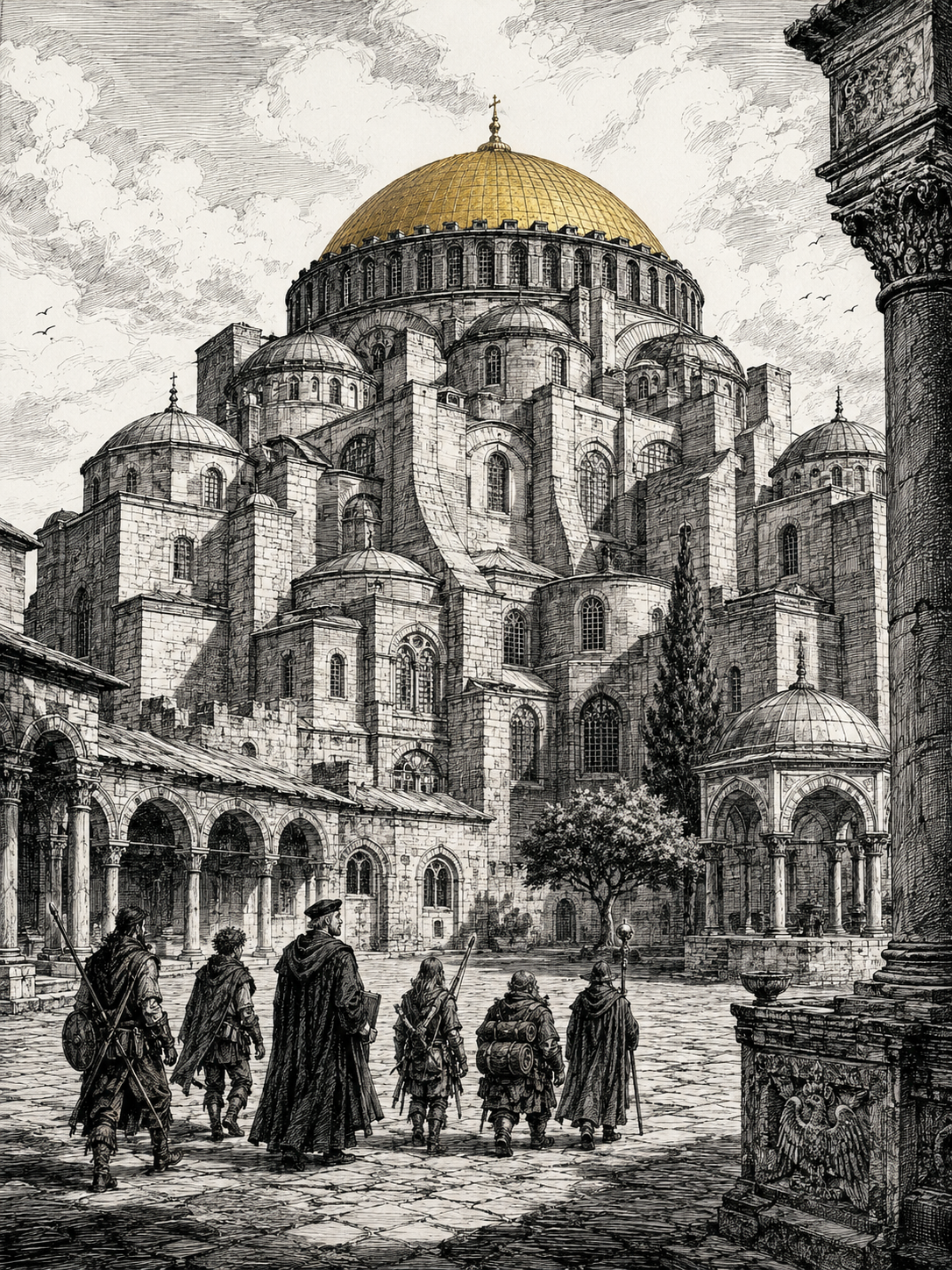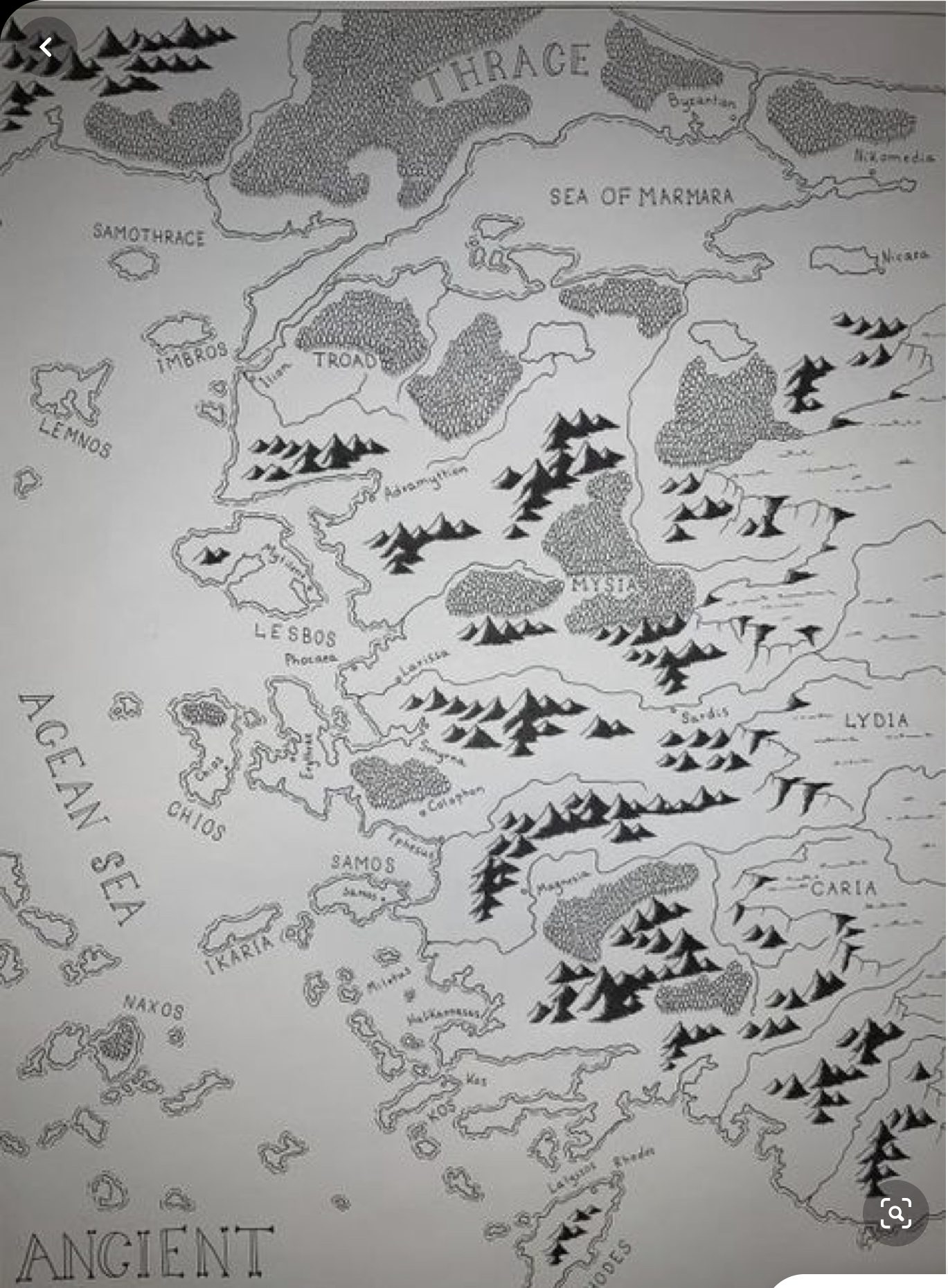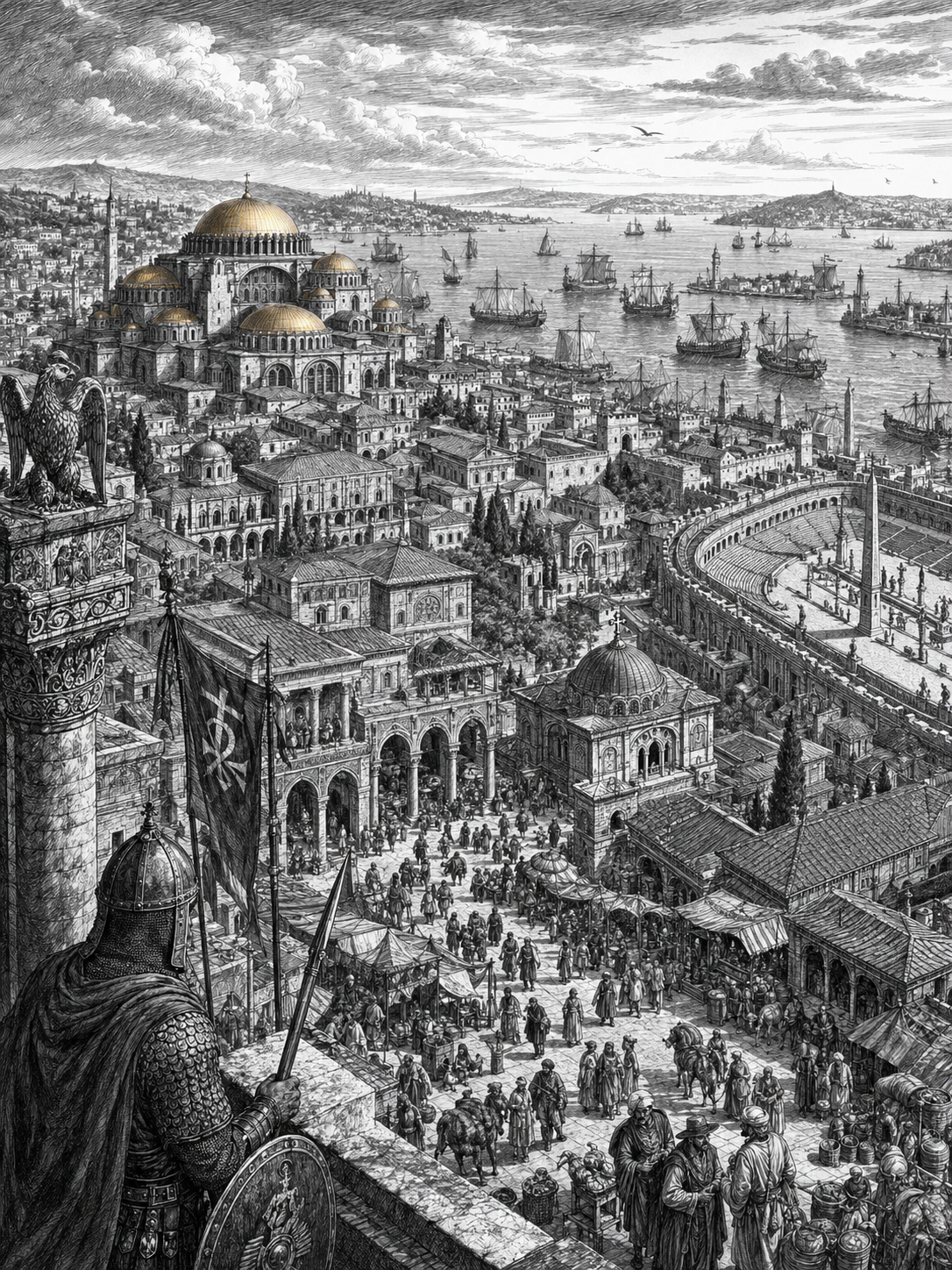
Uchronic Constantinople is the Byzantine capital held in an artificial five-year loop, from 1050 to 1055, by major chronomancers of the Antiterra axis. The city happens in both years at once.
| Type | Place (city in a time loop) |
| World | Antiterra |
| Era | 1050–1055 |
| Rulers | Empresses Theodora and Zoe |
| Spanish entry | Constantinopla Ucrónica |
The loop
A traveler entering by the Golden Gate in 1050 can leave by the Forum in 1055 without noticing, if the guardian of the varco (the passage) lets him through. Those not let through repeat the whole five years until they find the way out; the subjective length of that confinement has not been measured. The dome of Hagia Sophia is the same in both years: crowned by the Constantinian chi-rho in 1050, by a full Greek cross in 1055.
Firearms do not work inside the loop: temporal crystallization guards the varco against anachronisms.
Description
The city keeps the splendor of the Eastern Roman Empire in its last stable decade: galleys on the Bosphorus, a fully working Hippodrome, political factions by color (red, blue, green, white), Arab, Persian, Slavic and Latin merchants, and constant incense. Theodora and her sister Zoe co-rule in tension. The Varangian Guard, Norse warriors magically enhanced, guards the Great Palace and the varco itself.
Events of the loop
- The Regulators arrived from Uchronic Paris through a chronomantic fall into the Bosphorus.
- Olaus Wormius made the Latin copy of the Blue Book, ultimate origin of the Necronomicon.
- The Regulators met Thomas Cole as the Variable Man.
- The Funeral Games of Theodora’s court.
- The expedition to the Valley of Death in central Anatolia.
- The Black Octopus crossing the Bosphorus opened and closed certain doors of the loop, by a mechanism not fully explained.
Conflicting accounts
- The loop is documented in book V of the Decadian. The role of guardian of the varco is attributed to Swan (spelled Swann), but the attribution is disputed.
Gallery