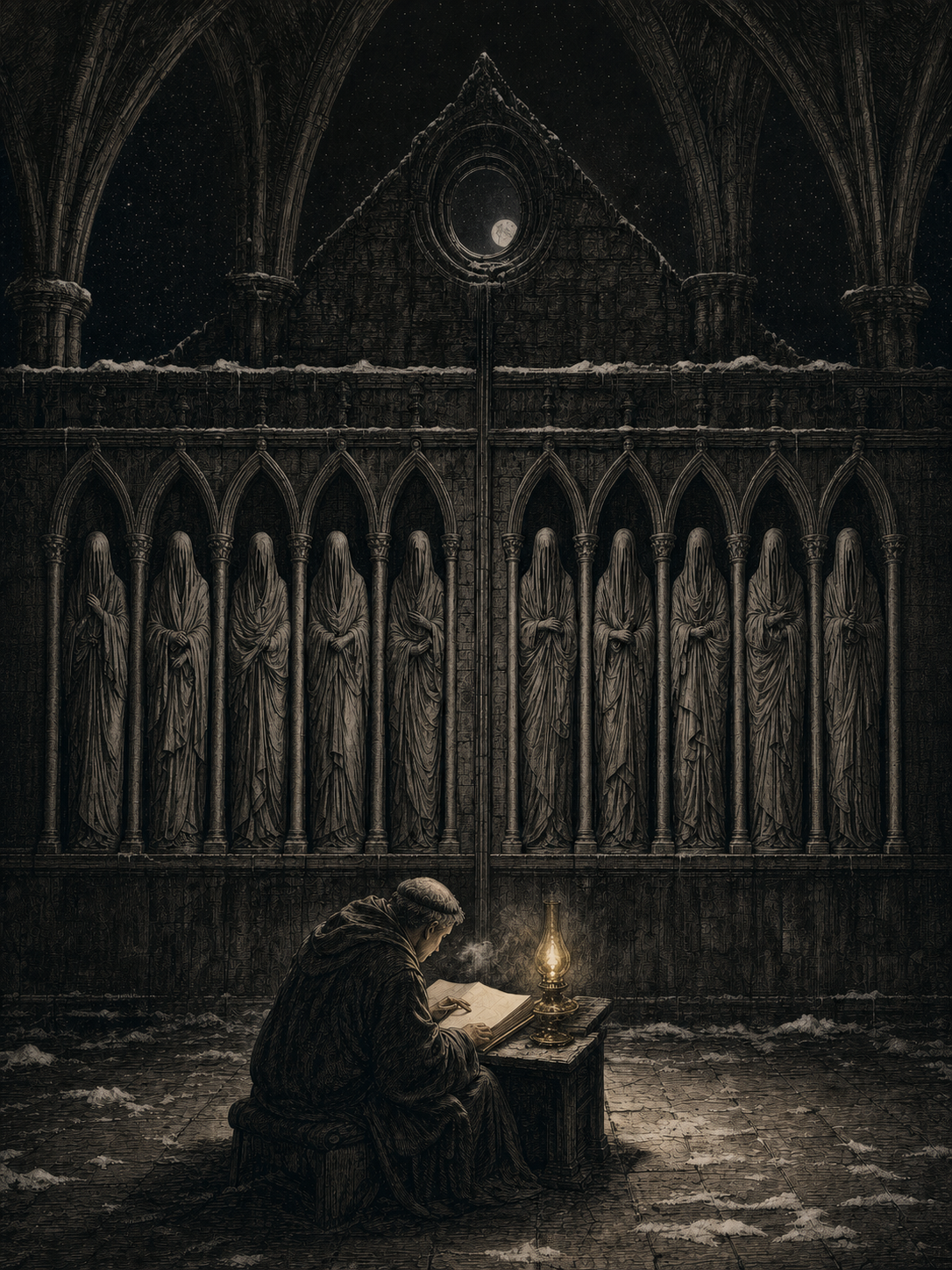
The Decadian (in full, the Decadian Church) is the dominant syncretic Gnostic church of the final cycle of Antiterra, whose pantheon of Ten New Gods opposes the Twelve Old Ones of the Old Imperial Faith.
| Type | Church |
| World | Antiterra |
| Head | Patriarch of Glastumville |
| Seat | Uchronic Paris |
| Spanish entry | Decadiano |
Doctrine
Its Manichaean dual structure divides auditori (laity, the majority) from electi (rigorist ascetics). The Ten New Gods (novem deos cum uno) stand against the Twelve Old Ones still kept by the Old Imperial Faith in peripheral provinces, whose martyr Priscus Pulcher is the church’s historical antipode. Ten matches the mechanics of temporal branching (diramación), developed as theology before bureaucracy made it administration.
Contradictions are admitted: the great devils have hidden solar faces, the Temple of Pelor operates within it, and the Lady of Notre Dame is both Mother and Platform. Roman Christianity survives in Antiterra only as a minority sect in two parishes of Rome and a strip of Ireland.
Organization
The Patriarch resides in Glastumville, absent from official maps but reached without fail by pilgrims who need it. Below him are bishops, copyists, interpreters of branching and temporal officials such as Don José de Iriarte, who apply the doctrine in the uchronic state.
The five major books are the Missal, the Treatise of Branchings, the Catalogue of the Ten, the Book of Closures and the Appendix of the Dead Patriarchs; the minor ones are countless.
”Time is administered”
One winter in Glastumville Cathedral, an anonymous copyist finished a marginal gloss on book V: “el tiempo no es absoluto, es administrado” (“time is not absolute, it is administered”). Months later the line was bolted to the front of Iriarte’s desk in the Palace of Time.