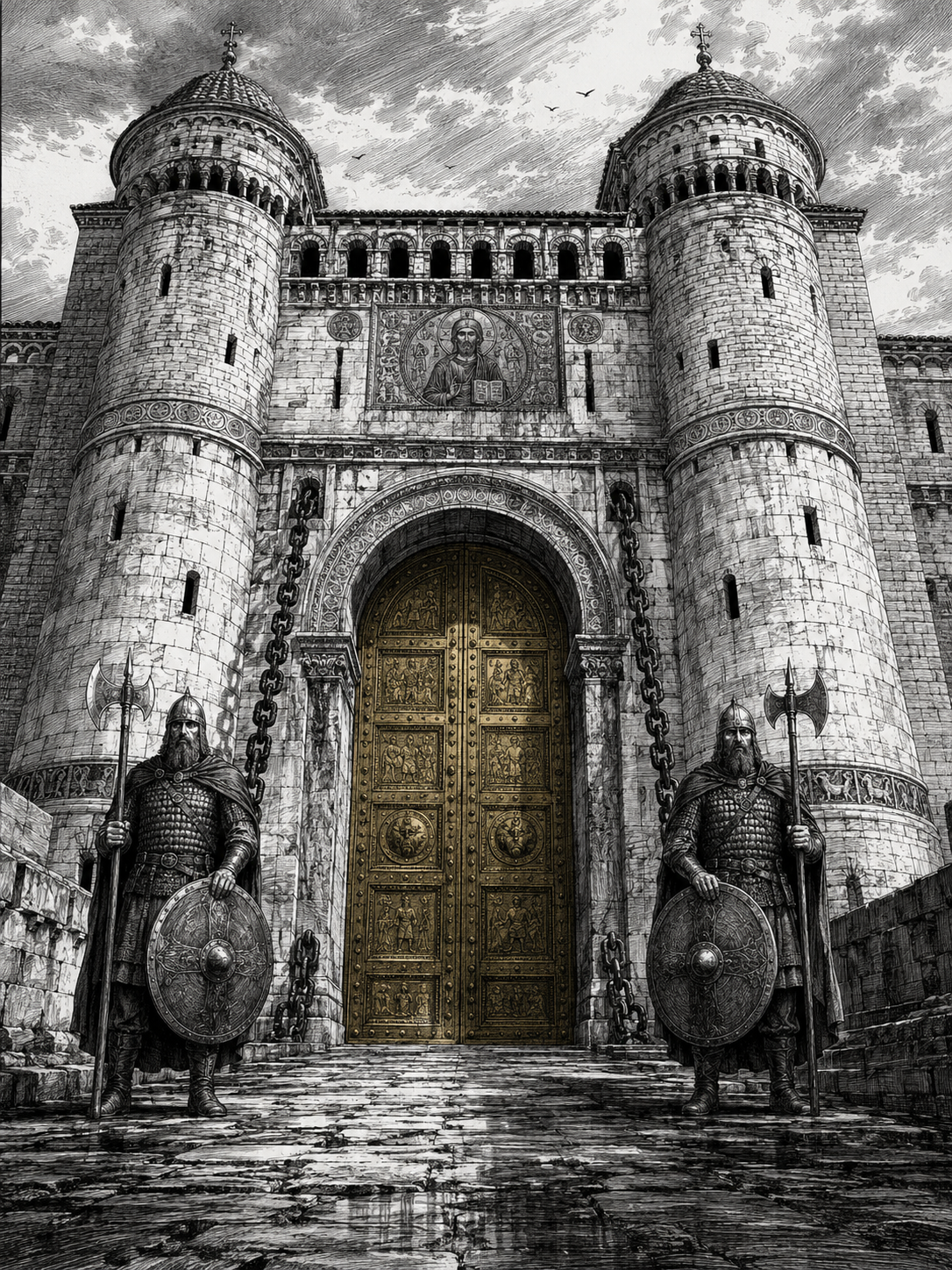
The Golden Gate (Porta Aurea; also the Triumphal Gate of Constantinople) is the gate at the western end of the walls of Constantinople.
| Type | Place (gate) |
| Era | Byzantine 11th century and earlier |
| Spanish entry | La Puerta Dorada |
Description
A great gate of gilded bronze, its two leaves carved with liturgical scenes, flanked by two white-stone towers with battlements and loopholes. Christ Pantocrator in mosaic is above the lintel. Massive chains hang at the hinges: the gate closes by chain, not bolt. Two Varangian guards, Nordic infantry with axe and round shield hired by the empire, stand at its foot; the Varangian Guard holds it.
Function
It opens three times a year and in particular circumstances, and is otherwise closed:
- Imperial triumphs: the victorious emperor enters with chained prisoners and carts of booty; the cortege goes to the Forum of Constantinople and the triumph culminates at the Cathedral of Saint Sophia.
- Visits of foreign patriarchs: major ecclesiastical protocol.
- Announcements of public calamity: when the palace guard needs the city to hear the herald from the far western end.
In Constantinople 1055 it is still guarded, gilded and closed.