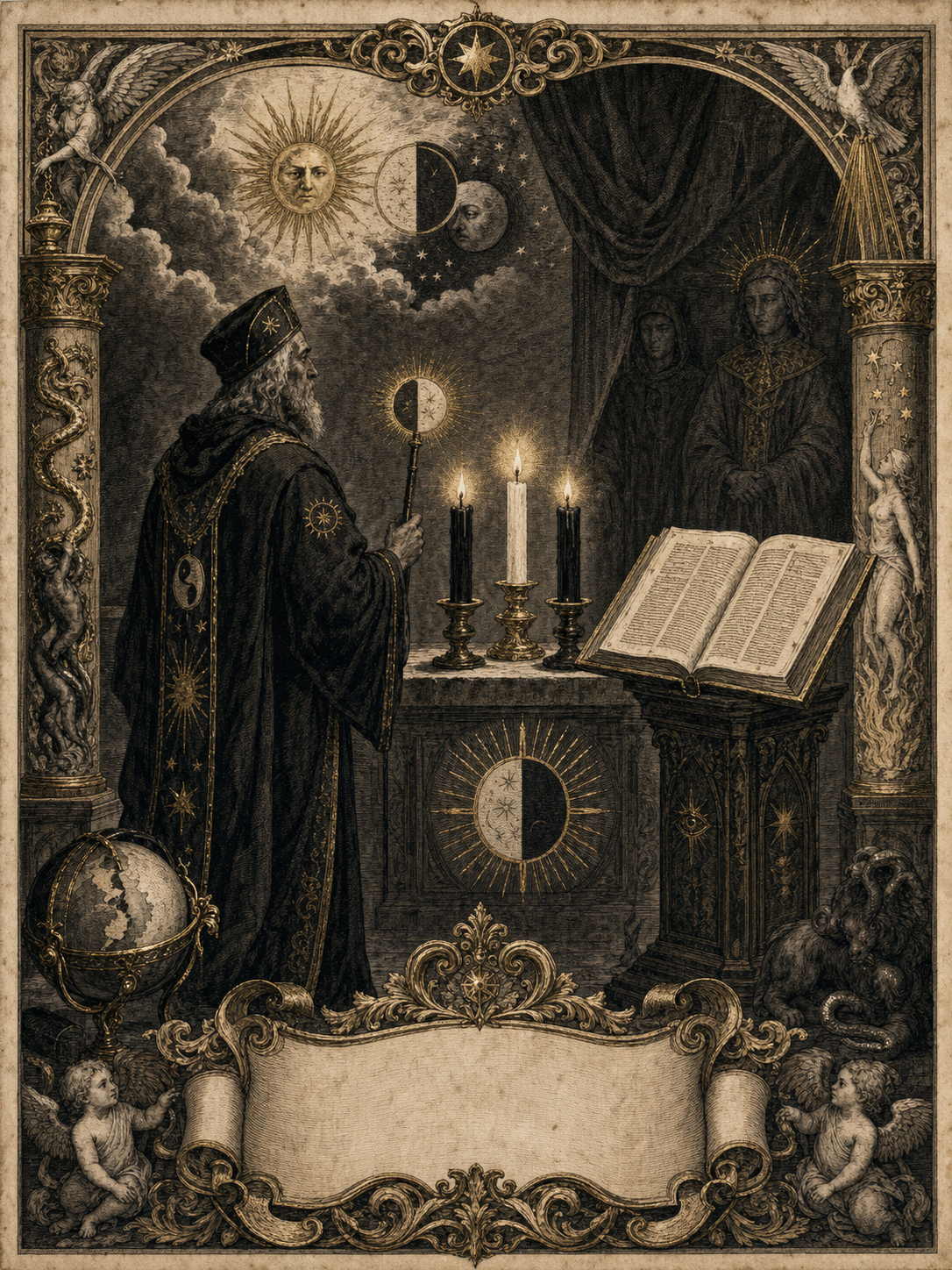
The Gnostic Church of Antiterra is the dominant religion of Antiterra: a syncretic Gnostic-Manichaean faith in which Christianity leaned toward Mani rather than Peter, placing the theology of the two principles, light and darkness, at the center of official belief.
| Type | Organization (church) |
| World | Antiterra |
| Leader | Patriarch of Antiterra |
| Seats | Patriarchate in historical Alexandria; vicariates in Paris, Florence, Thessalonica |
| Era | A.D.A. |
| Houses of the Cycle | ☯ House of the Twin Cosmos · ✒ House of the Chronicler |
| Spanish entry | La Iglesia Gnóstica de Antiterra |
Doctrine and authority
Neither Roman Catholic nor Greek Orthodox, the Church incorporates Coptic, Neoplatonic and Syriac elements; where Terra had Peter as vicar of the Son, Antiterra had Mani as a concurrent prophet. It combines doctrinal authority with geopolitical weight. The Patriarch, its supreme leader, stands above local priests and regional vicars. When Erzebeth invokes the Church, she bypasses the parish priest and calls on the Patriarch directly, and he answers.
The two ranks
The faithful are divided into two parallel ranks, a doctrine inherited from historical Manichaeism and recorded in detail in book V of the Decadian:
- Auditori (“those who listen”): the lay outer rank. They may eat meat, marry, trade and wage war; they must support the electi and keep minor abstinences on certain days. Most Antiterrans are auditori.
- Electi (“the chosen”): the ascetic inner rank. Strict vegetarians, celibate, unarmed, propertyless; their bodies are vehicles of light, and their practice frees light trapped in matter. Priests and the Patriarch are chosen from them.
An auditor who fights or fornicates does not sin; he has simply not reached the electi’s level.
Many prophets
Jesus is recognized as one of the major prophets, but not the only one. Mani, Zoroaster, Buddha and Hermes Trismegistus all appear in the liturgical calendar, each with a day and readings. The doctrine calls this “graded polycentrism”.
There are no schisms like Terra’s, no Inquisition in the common sense, and no wars of religion. Conflicts between rival patriarchal schools and traditions of electi take the form of academic debate, not crusade.
Hidden currents
The Church coexists with hidden currents: the Circle of the Serpent operates within its institutional body; Sortianism, a heretical current, operates on its margins; and ties to figures of the Abyss run through certain vicariates, which the Patriarch is in no position to purge.