Read the comics in English
Eighteen comics drawn from the campaigns. Each opens as a full PDF or in a web reader.
 English comic · PDF
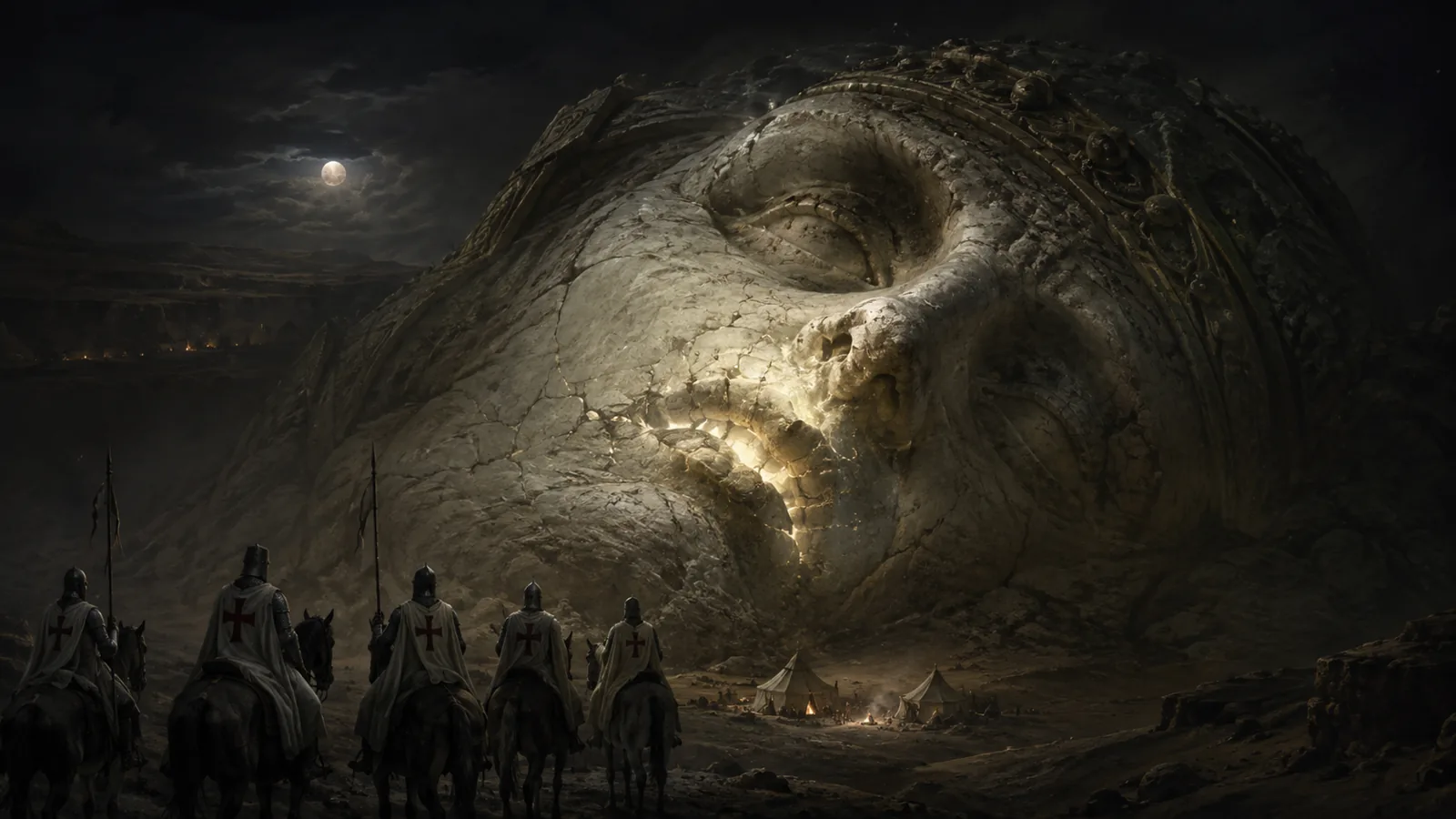
Templars of Time
A fallen star leads novices of the Temple into a labyrinth inside a titan's head.
Read in English →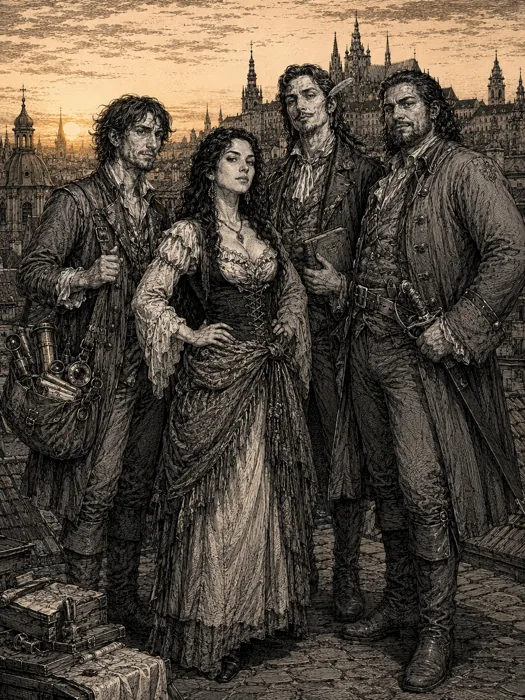 English comic · PDF
Les Libertateurs
A consecrated and cursed Host draws a band from Prague through America to Paris before the Revolution.
Read in English →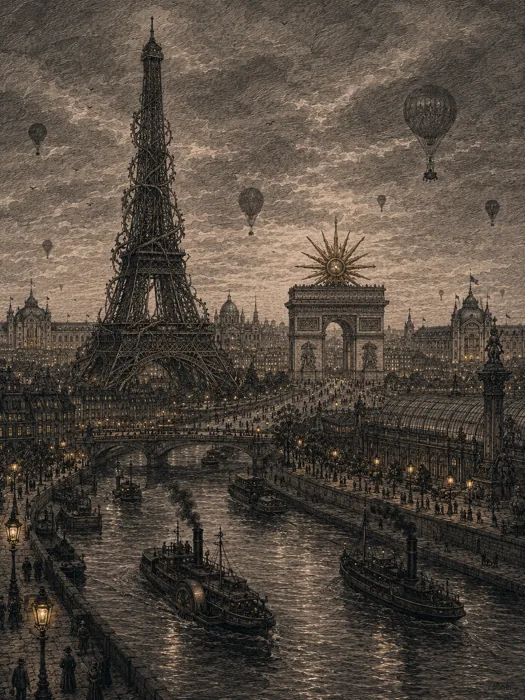 English comic · PDF
Uchronic Paris
In Belle Époque Paris, time can be bought and sold.
Read in English →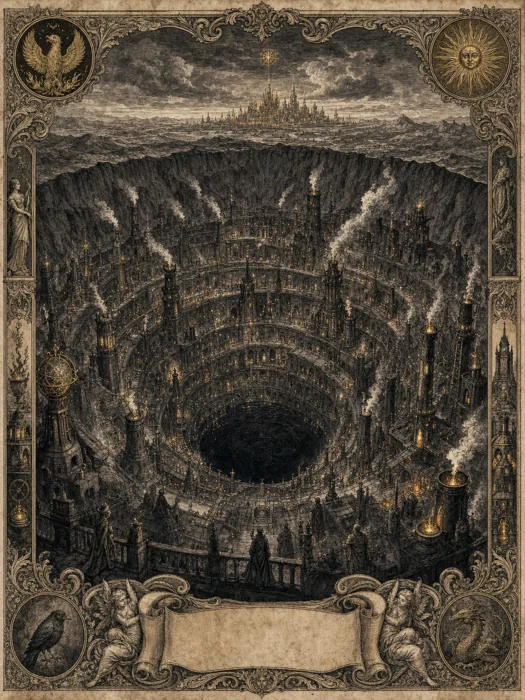 English comic · PDF
Caldero · The Javelin
A city fills a volcanic crater: noble towers on the rim, flooded streets below, lost passages underneath.
Read in English →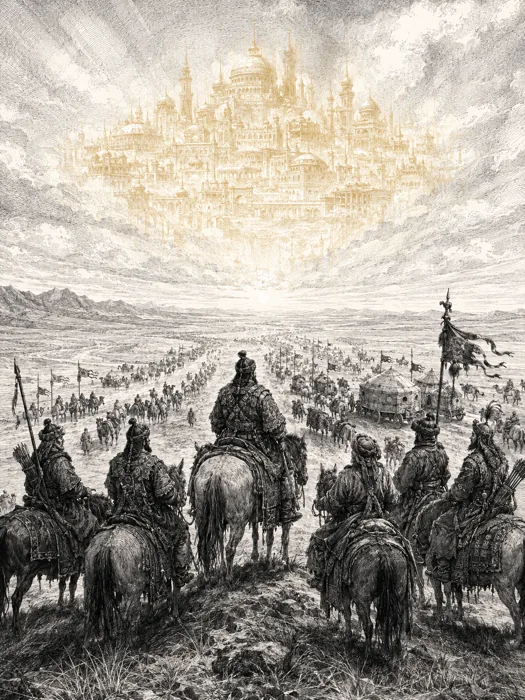 English comic · PDF
Invisible Cities
Twenty-five hollow cities lie hidden beyond the Silk Road, occupied by the shadows of devils.
Read in English →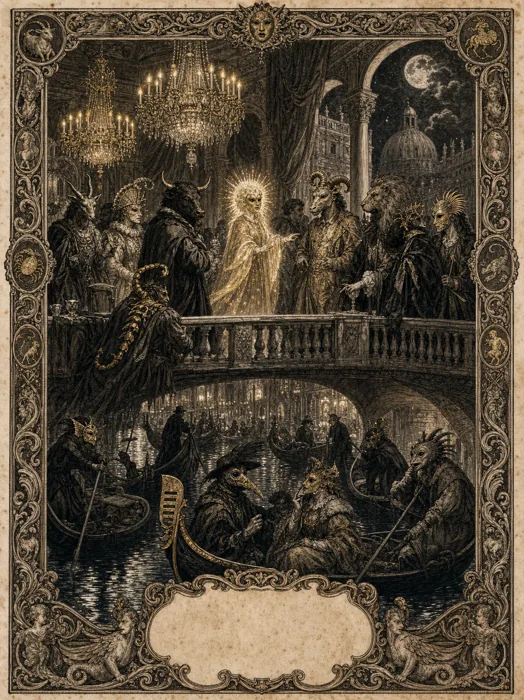
 English comic · PDF
Apocalypse Quarantine
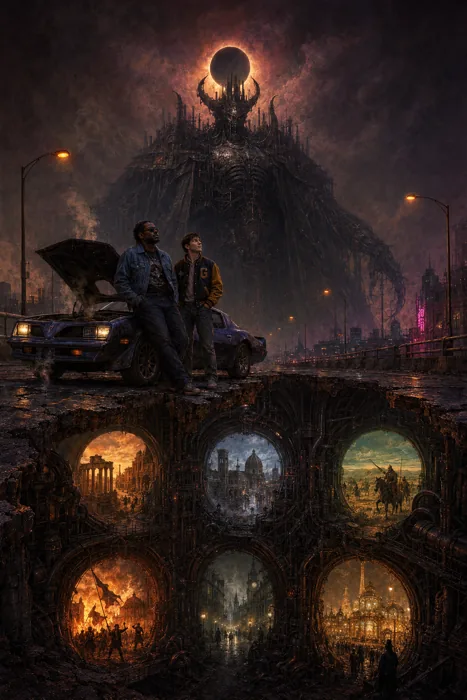
Behind Iron Mountain's sixth portal lies 2087: a pandemic world whose people live as flesh plugged into virtual reality.
Read in English →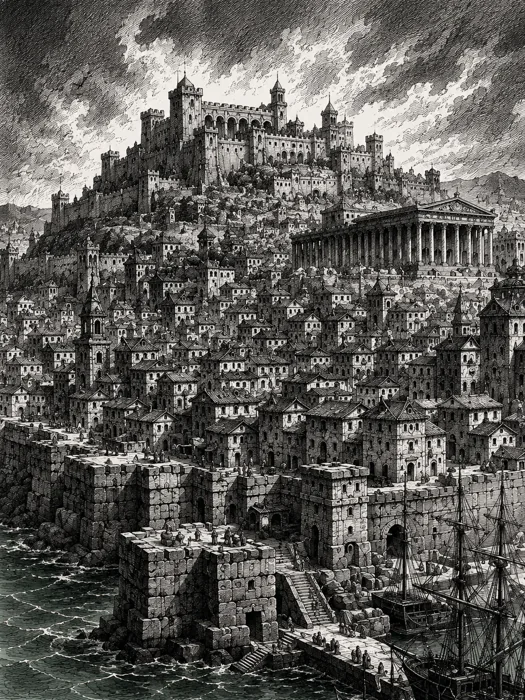 English comic · PDF
Uchronia of Independence
An alternate Independence, set in 1838, connects Tanastias and Torregrises.
Read in English →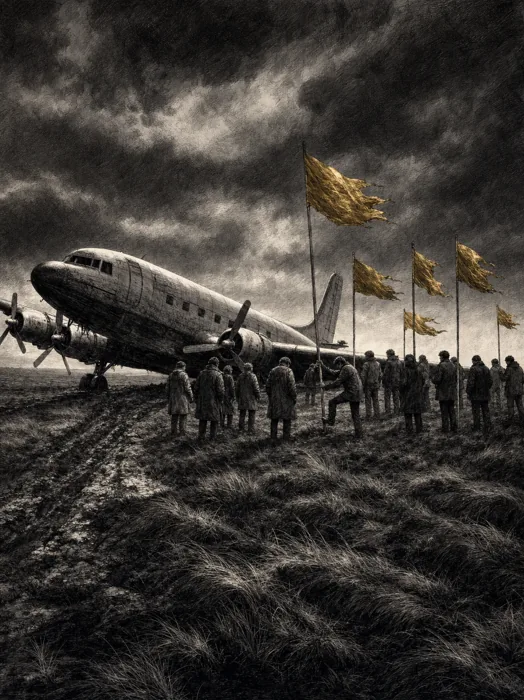 English comic · PDF
Malvinas Belong to Tulu
A hijacked flight lands in the Malvinas in 1966.
Read in English →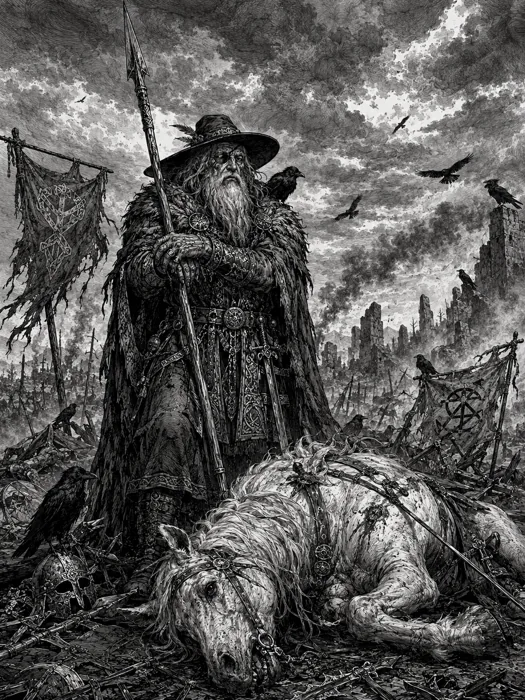 English comic · PDF
RuneQuest Vikings · The Seat of Storms
A year in the fjord of Hafr, in ninth-century Norway.
Read in English →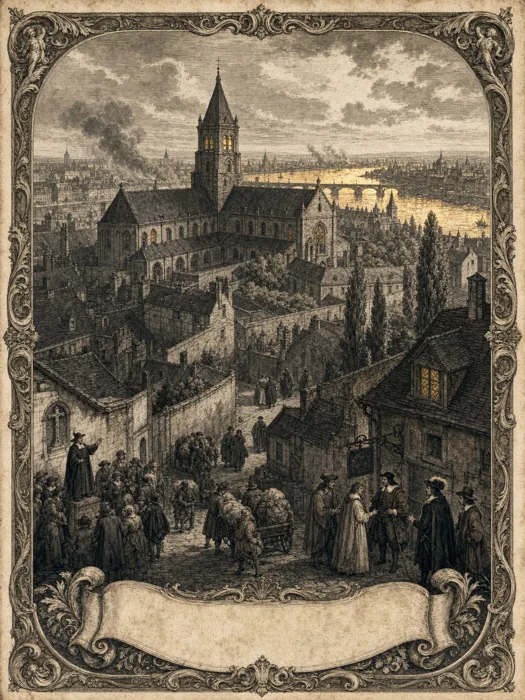 English comic · PDF
Miseries and Misfortunes · The Swords of Saint-Germain
Paris, 1648.
Read in English →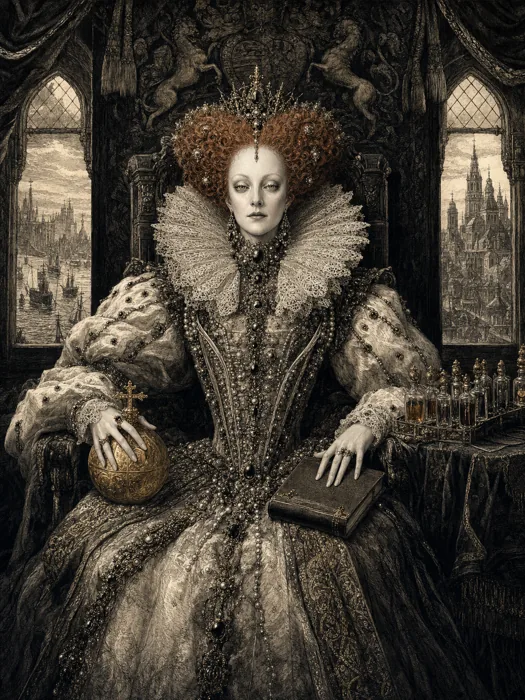
 English comic · PDF
Legends of Cairo · The Dagger and the Feather
A relic brings three strangers together in Boston in 1928 and sends them to Egypt in search of the Blue Crown.
Read in English →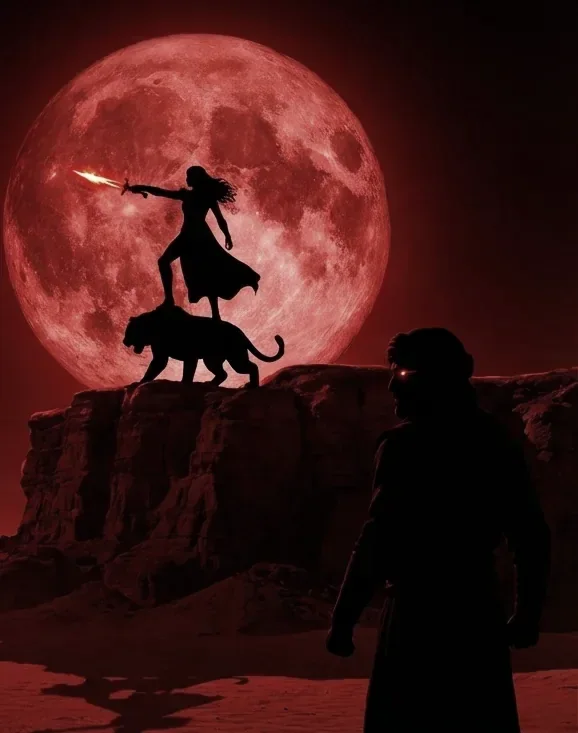 English comic · PDF · standalone tale
Cairo, 1929 · Night of Antiquity
An invitation, a private collection, and the price of knowing.
Read in English →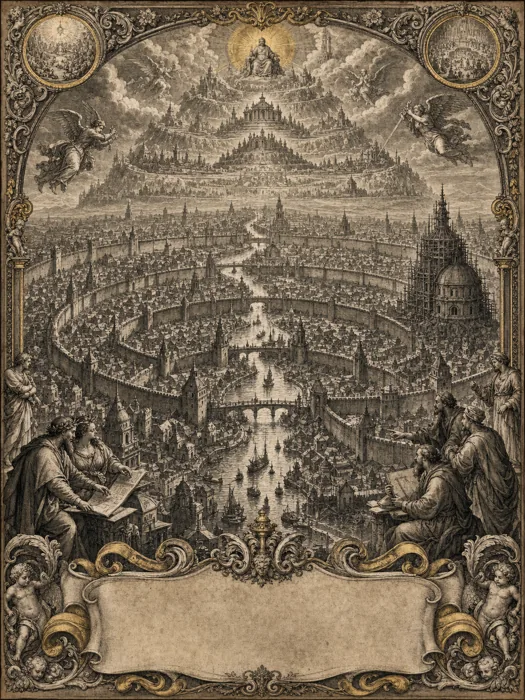
 Work in progress · sketch · PDF
The Kids of Sogol
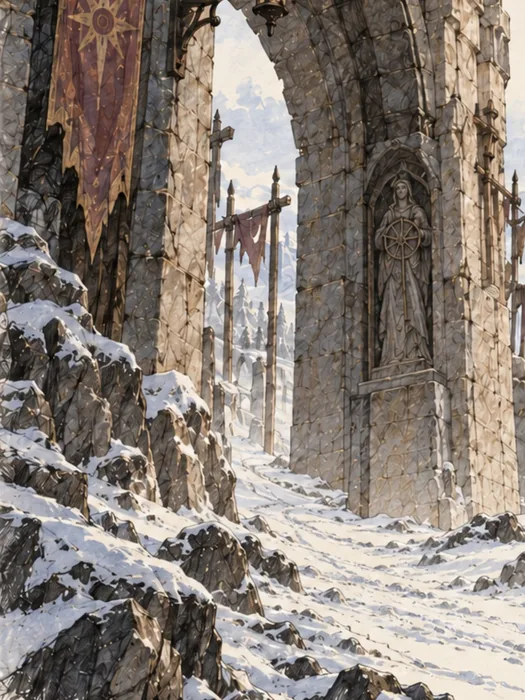
Four friends from Sogol's Gatehouse Alley cross an arch that said “not yet” into a freezing world, and the road makes room for a fifth.
Read in English →
From the founding chronicles, before any campaign card: Arian · The Elf and the Shadow (English comic, PDF) · its place in The World →
The ATEM
chronicles
Thirty campaigns. A shared history told across worlds, centuries and generations of play.
Enter through a story. Follow its people, places and unfinished questions into the English glossary.
From the table to the page
How the archive works ↓- 01PlayA shared event
- 02WriteNotes around the table
- 03RecordThe session in sound
- 04TranscribeKeep source coordinates
- 05ConsolidateCheck names and gaps
- 06ConnectCurate the glossary
- 07RetellComics and summaries
- 08ReturnTrace back to the source
Canon, recordings, notes and memories keep their own provenance. A retelling can connect them; it cannot silently settle a contradiction or fill a missing ending.
Choose a thread
Read a short introduction, then follow it into the glossary or an English comic. Switch between the time of the world and the time of play to see how the campaigns meet.
English comics online: RuneQuest Vikings · The Seat of Storms, Templars of Time, Florenzen · The Infernal Fracture, Invisible Cities, Miseries and Misfortunes · The Swords of Saint-Germain, Gloriana, Les Libertateurs, Carnival, Uchronia of Independence, End of Antiterra, Uchronic Paris, Caldero · The Javelin, Legends of Cairo · The Dagger and the Feather, Malvinas Belong to Tulu, Gary · the New World, Apocalypse Quarantine, The Kids of Sogol. Original Spanish decks, where one exists, are under each card’s sources.
Follow the company across campaigns
Players appear in Middle-earth code — one Tolkien name per person. No real names are published here.
Mediterraneum
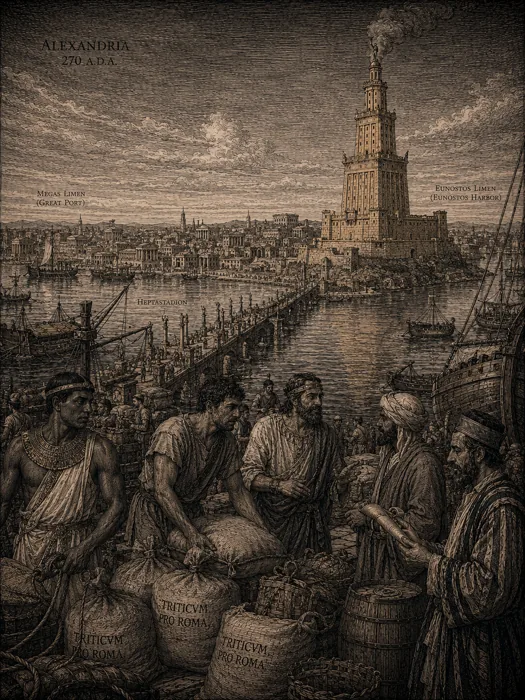
From Alexandria to the underworld, a company crosses the Mediterranean in the third-century crisis. Their descent into Avernus has a deadline: reach the infernal library before Marcos the Mage steals the Book.
RuneQuest Vikings · The Seat of Storms
A year in the fjord of Hafr, in ninth-century Norway. A household survives through bargains with its neighbours, the spirits of the land and the people of the sea. Each alliance carries a cost.
Sources & original deck
RQV consolidated sessions, introduction: the Ulfstad household and its pacts.
Original illustrated deck · Spanish →Templars of Time
A fallen star leads novices of the Temple into a labyrinth inside a titan's head. Relics, impostors and a forbidden book turn a pilgrimage into a struggle over time itself, from Jerusalorium to Paris in 1889.
Sources & original deck
Templars of Time (Templars) · Templars of Time
Original comic artwork
Original illustrated deck · Spanish →Florenzen · The Infernal Fracture
Florence, 1300. Someone is poisoning Dante's children to control his vote. Hired because nobody knows them, the company follows the conspiracy through rival houses and a sealed palace, then sails towards the Holy Land.
Invisible Cities
Twenty-five hollow cities lie hidden beyond the Silk Road, occupied by the shadows of devils. Finding them is only the beginning. Each city demands a different decision about what it would mean to free it.
Miseries and Misfortunes · The Swords of Saint-Germain
Paris, 1648. Barricades rise against the crown's taxes while Mazarin rules for a child king. Saint-Germain, the royal court and the streets belong to competing powers: the setting for Miseries and Misfortunes.
Gloriana
Albion, 1660. Elizabeth never died; her court celebrates a century of rule. Commoners with little money or magic rescue a condemned father from Tyburn and flee into an England whose golden age will not end.
Indians and Dragons
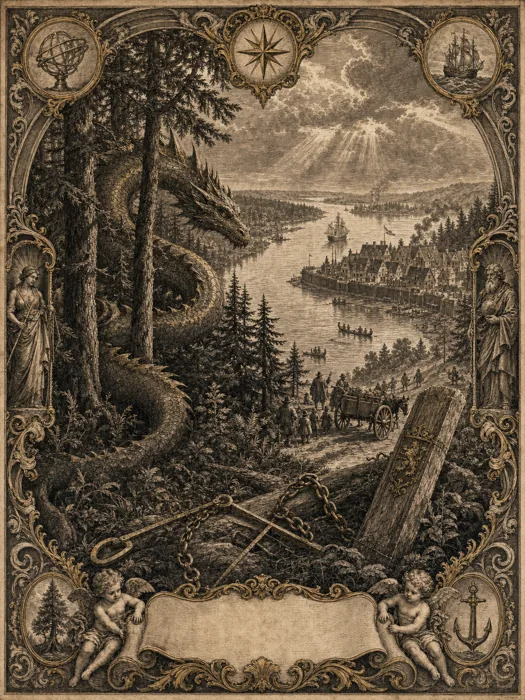
Along the Hudson in an alternate colonial America, four companions from Abeto Rojo confront a stone-masked cult. River trade, forest magic and elemental powers draw them beyond the authority of their small crossroads town.
Sources & original deck
Original illustrated deck · Spanish →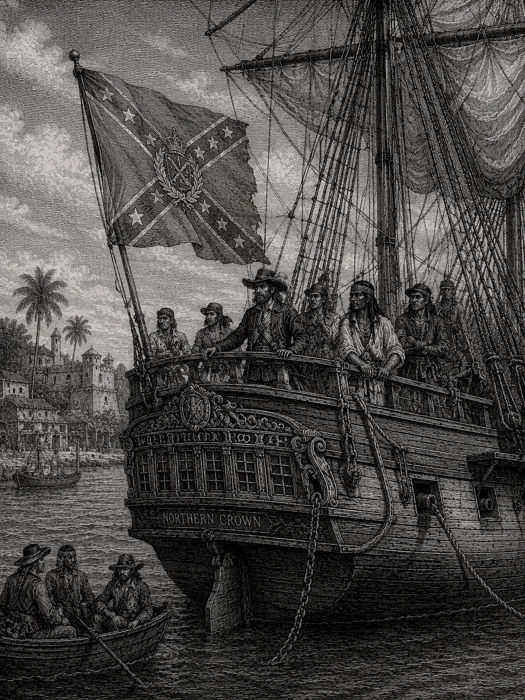
Northern Crown
Two companies cross an alternate seventeenth-century America. The Northern Crown is both a colonial domain and the ship that carries its authority. Its calendar belongs to a separate fold of Antiterra, whose connections remain unsettled.
Sources & original deck
Wheel of the Gestas · The Northern Crown
Original illustrated deck · Spanish →Les Libertateurs
A consecrated and cursed Host draws a band from Prague through America to Paris before the Revolution. The Game of Shadows carries them across zodiacal platforms, where saving their world may mean choosing against countless others.
Carnival
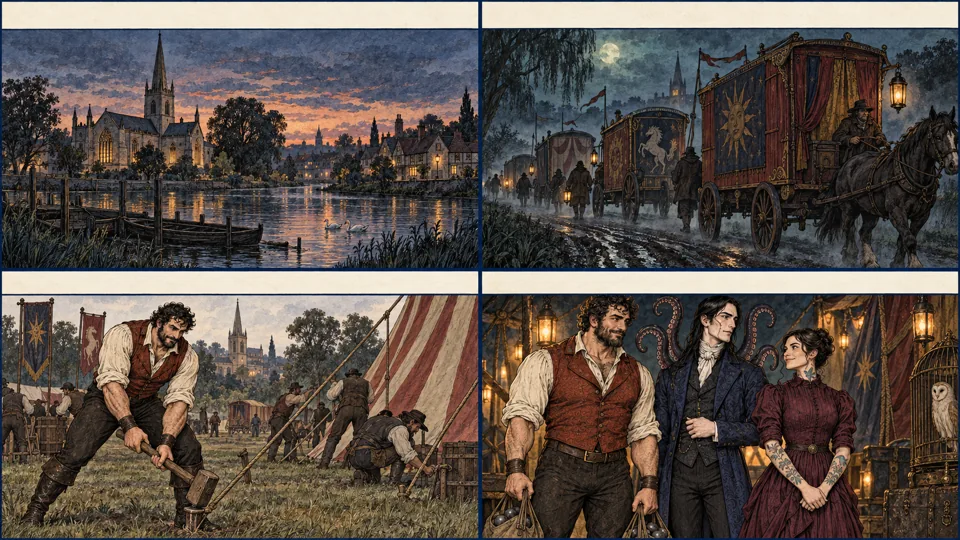
A travelling circus reaches Stratford-upon-Avon. Shakespeare's tomb, family relics and a written curse pull its performers into a mystery where scholarship meets the dead. The surviving account leaves the last threat unresolved.
Sources & original deck
Carnival consolidated sessions, introduction and source gaps; no ending supplied.
Original comic artwork
Original illustrated deck · Spanish →Uchronia of Independence
An alternate Independence, set in 1838, connects Tanastias and Torregrises. These places carry an older history into a new campaign. The first season remains open; its place in the archive can be explored through the campaign record.
Sources & original deck
Wheel of the Gestas · Tanastias · Torregrises
Original illustrated deck · Spanish →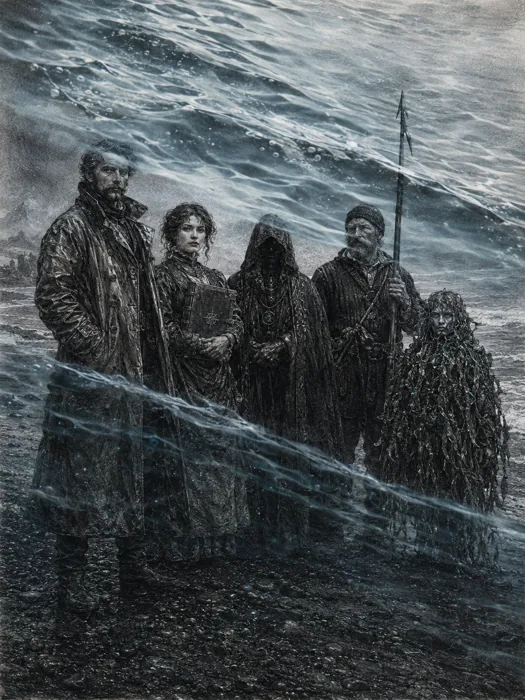
The Deep Ones
Spanish anarchists set out to sea and descend beneath the Atlantic. In Atlantis they become the Deep Ones, then travel towards the zodiacal platforms of America. Their later life as the Regulators continues the same troubled company.
End of Antiterra
Antiterra faces destruction. The guardians gather in Venice while rival powers bargain over survival. A prison cell rebuilt as Vault U-571 holds forbidden knowledge of the platforms, and a crystal becomes part of what can be saved.
Sources & original deck
The Deep Ones · Carnival of Venice (~1901 A.D.A.) · Vault U-571 · Ancient Vala
Original illustrated deck · Spanish →Uchronic Paris
In Belle Époque Paris, time can be bought and sold. The Time Bandits move through a city governed by temporal authorities, inheriting consequences from earlier campaigns. Their path reaches beyond the capital towards Sarajevo.
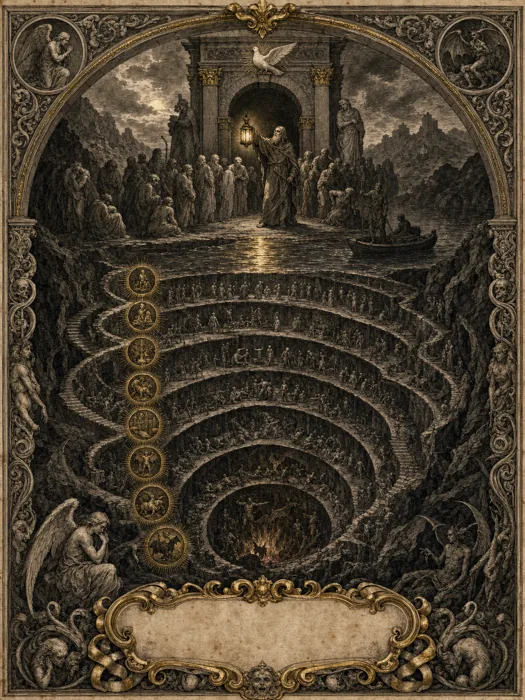
Inferno / The Descent
Beyond the Acheron, seven circles make the descent a return to what the soul left unresolved. Swedenborg's Lamp of Hope guides the threshold. As bodies and landscapes change, the possibility of ascent remains part of the journey.
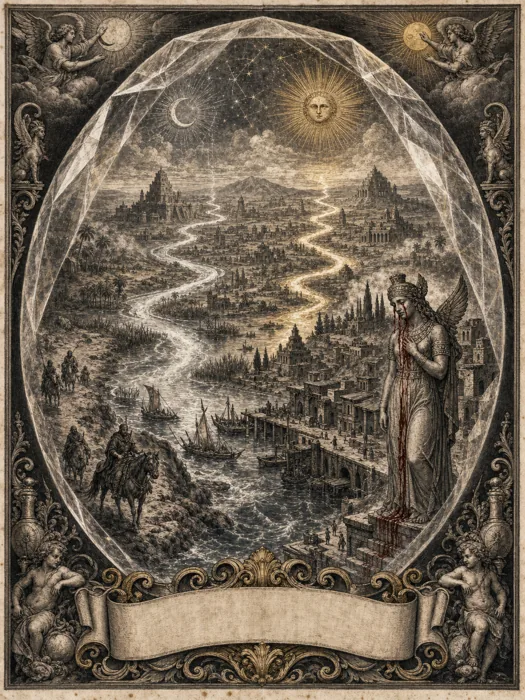
Vala Terra Cristalis
The Word Breakers walk a world of rivers, temples and rival Houses. They do not know that their world exists inside a crystal. Stolen sacred objects and failing magical structures expose the seams of its creation.
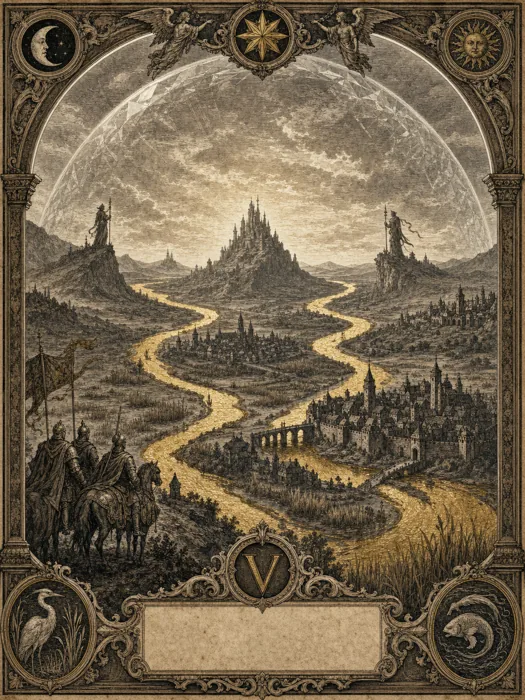
Medieval Vala
Vala enters its medieval age. The barrows of Barrowmaze belong to a world between the ancient founders and the later ruins of Ardis Vala. Its exact chronology and narrative connections remain open questions in the glossary.
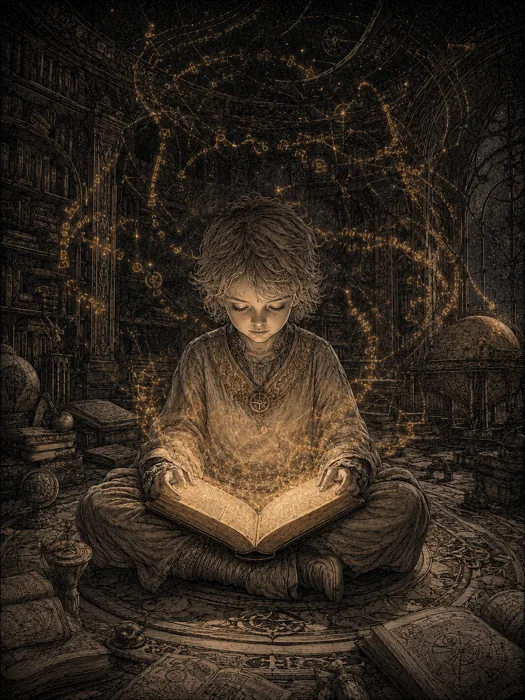
Blackwater
The Clock of Vala reaches year 724 of the Auran Empire. Türos Tem, the Old Gray Skull's dome and the River Sorcerer mark this frontier chronicle. The campaign record preserves the closure of the Lady Below's arc.
Sources & original deck
Original illustrated deck · Spanish →Caldero · The Javelin
A city fills a volcanic crater: noble towers on the rim, flooded streets below, lost passages underneath. Kidnappings and civic violence open onto a larger history in which the gem-world itself becomes a javelin.
Sources & original deck
Original illustrated deck · Spanish →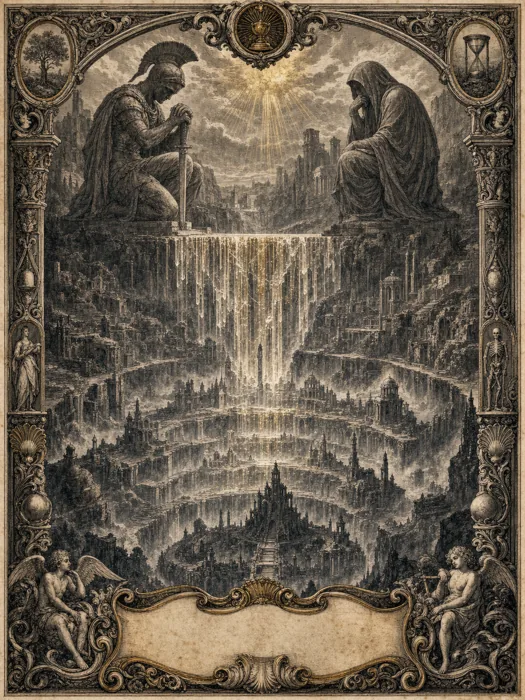
Ardis Vala
Beneath a fallen magical city, the way leads down through a vast complex under the Great Waterfall. Factions, cults and competing histories claim its spaces. The ruins stand over a place where creation itself once broke through.
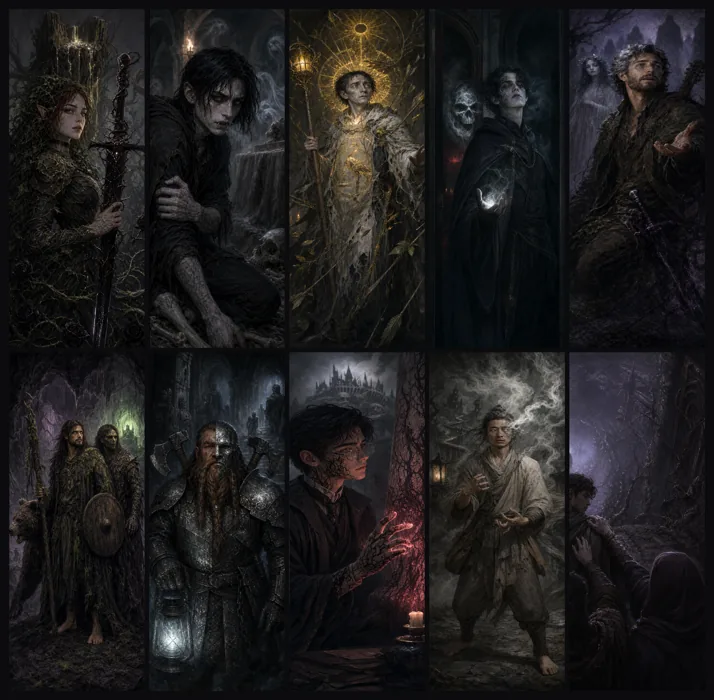
Ravenloft Novices
Fledgling adventurers from Helix enter the barrows of a land enclosed by mist. Their path leads to Ardis Vala and the company later called the Condemned. Even their deaths become a connection between worlds.
Legends of Cairo · The Dagger and the Feather
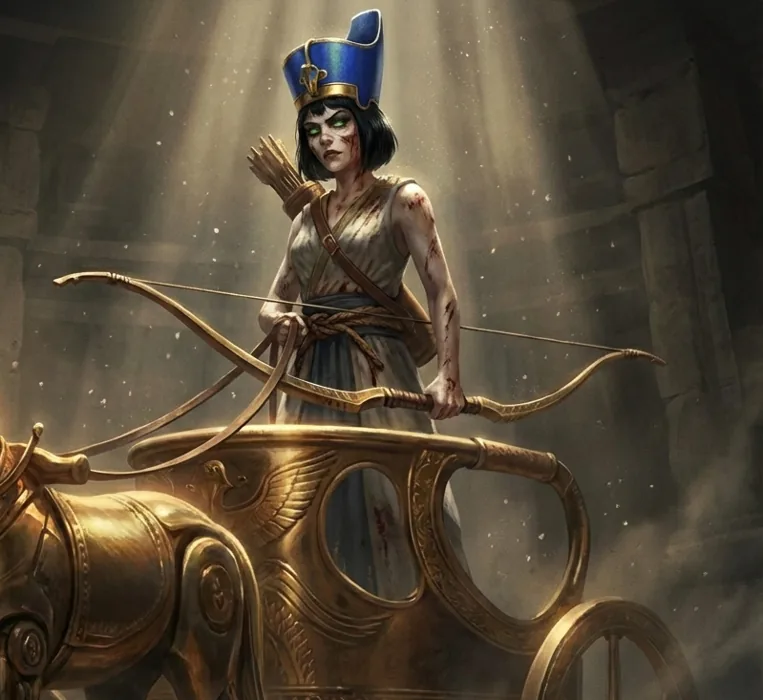
A relic brings three strangers together in Boston in 1928 and sends them to Egypt in search of the Blue Crown. Journalist Teddy Bennet keeps the account; his notebook survives quicksand, black water and the journey beneath the desert.
Malvinas Belong to Tulu
A hijacked flight lands in the Malvinas in 1966. The historical Operativo Cóndor becomes the threshold of the campaign's fiction: a lighthouse, an isolated archipelago and Chthonians beneath the islands.
Gary · the New World
Gary, Indiana, 1987. Beneath a declining steel city, portals connect different eclipses. A band of outsiders enters Iron Mountain, where the Iron God plans to fuse five versions of himself and escape his prison.
Sources & original deck
Original illustrated deck · Spanish →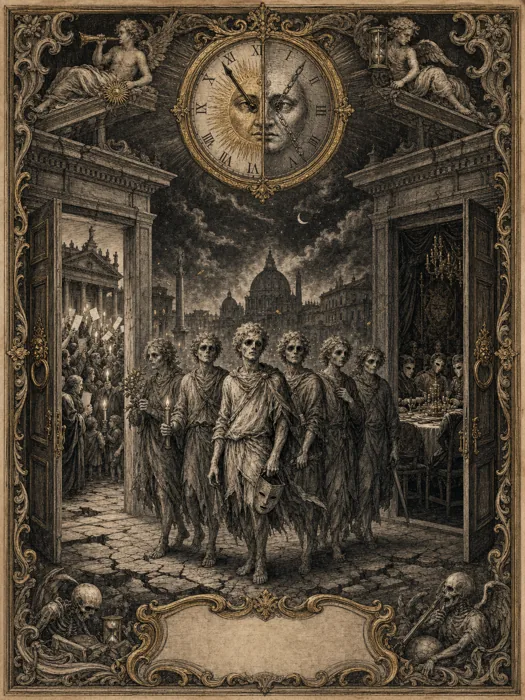
Vampire · Buenas Sangres
Buenos Aires returns to democracy; its vampire court keeps the old masters. Six young undead, joined by accident and divided by loyalties, move from the city towards Rosario and Uritorco between 1987 and 1991.
Never 9-11 · Earth-212
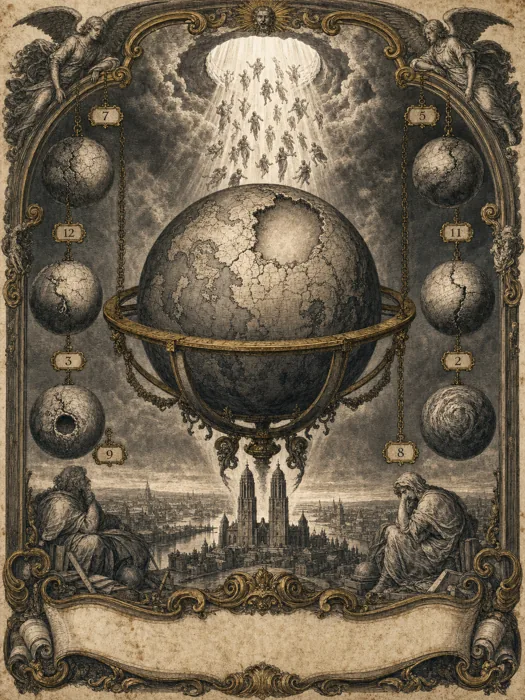
The towers did not fall. A white hole opened, and New York spread until it occupied the entire world. On Earth-212, corporate power, crime prevention and sanctioned superheroes maintain the order of a city without an outside.
Apocalypse Quarantine
Behind Iron Mountain's sixth portal lies 2087: a pandemic world whose people live as flesh plugged into virtual reality. Quarantine-breakers leave their subway refuge and head for the sphere at the Master's heart.
The Crisis of the Sigil Contracts
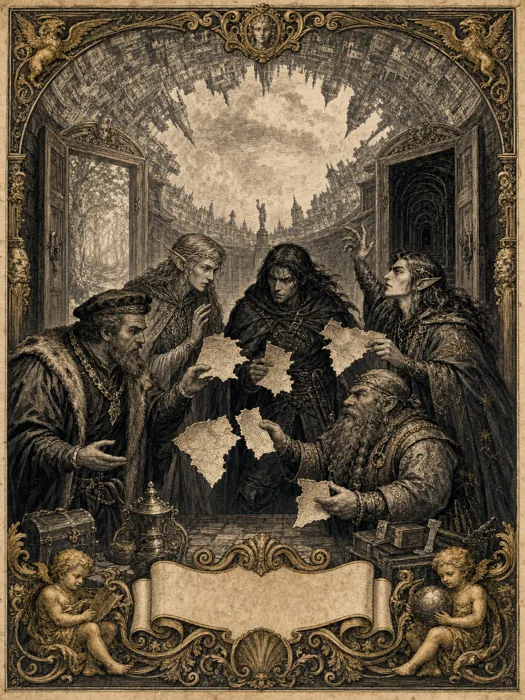
Fragments of lease contracts are also keys to portals. A mixed company in the City of Doors becomes entangled in a political trial, a healer's murder and a shadow threatening both Sigil and Alfheim.
The Kids of Sogol
Four friends from Sogol's Gatehouse Alley cross an arch that said “not yet” into a freezing world, and the road makes room for a fifth. An inheritance, a convoy and a war carry them to a court of star knights, which defeats them, lets them go armed and binds them with a wound to a task they did not choose.
Sources
Sessions 7 and 8 — the court, the wound, Arborea and the three eladrin — are told in the comic and not yet in the glossary.
Original comic artwork
No Spanish deck yet: this chronicle entered the Archive in English.
Each line is a chronicle, tied between its rank in the order of the table and its rank in the order of the world. The lines that cross far are the anachronies of the cycle: the Archive opened in medias res — The Deep Ones, 1888, played first — and the end of the axis was played halfway — the quarantine of 2087, in 2020. Kendall's τ = 0.46 over the 24 chronicles with an exact date: partial concordance, a forward drift with structural leaps. And the contrast that turns the matter around: τ within each campaign ≈ 1 — zero discordant pairs in 19 measurable campaigns. Anachrony lives at the level of the cycle, not of the campaign. The measurement comes from the paper on the Mega Campaign; here it is only redrawn.
A chronicle played in 2019 can take place in 1300: that is why there are two orders and not one. The year at the table runs from 2013 to 2026 and was fixed by the one person present at all of them; four campaigns have no exact date in the Archive — Carnival, Gloriana, Vampire and Never 9-11 — and are placed by testimony, so they take part in the ordering but not in the measurement. The Crisis of the Sigil Contracts goes last and without a line: its only temporal coordinate is a distance — the table closes two months before the March of the Modrons sets out, the census the modrons of Mechanus take every 289 years — and a distance locates a before and an after, not a year. The Kids of Sogol, still at the table, comes after it and also without a line: it entered the Archive in English, without a Spanish deck, and its place in the world's time is not fixed yet. Each chronicle has a single deck: the two variants that existed were withdrawn from the mosaic on 29 July 2026.
Presented as Canon, Recordings, Notes and Memories: 35 Years of Ludic Praxis — Marcos O. Cabobianco (Universidad de Buenos Aires), 10th International Colloquium on Role-Playing Game Studies, Newark (NJIT), July 2026.
The method, the pipeline and the hierarchy of sources
Four kinds of data, each with its own way in
The study of role-playing games has tended to work ontologically — asking what role-play is, what defines a campaign, what makes a mega campaign. This page works the other way: instead of defining essences, it observes a practice and reconstructs it from what it leaves. A campaign, taken as a historical event of shared imaginative projection, leaves a heterogeneous material and memorial record; sorting that record is the precondition of any claim about what happened at the table.
Canon
What the table fixed as true: internal publications — wikis, gazettes, novelizations — and the outside canon it appropriated. Here, the glossary of the Archive: some 3,250 entries in Spanish, each with an English article.
Access: consultation of the publications.
Recordings
The indexical, time-continuous trace of the session as it happened. Here, 437 recordings in the register, February 2013 to June 2026 — at least ~814 hours — plus older strata from 2007 and late 2012.
Access: attentive listening and transcription.
Notes
What was written for and around the table. Here, 123 handwritten notebooks — the Archivo Total de Escritura Manuscrita that gives this site its name — transcribed a few at a time, alongside digital diaries and documents.
Access: the total archive of manuscript writing, and digital repositories.
Memories
What participants recall after the fact. They do not record the practice; they evoke it. In each chronicle file, attributions that came from recollection are counted and marked °.
Access: interviews, collective evocations, structured self-interviews.
The four kinds rest on two conditions: the context of the practice — who played, when, where, how often — and the rules put into play, which are the device through which the world is projected. That is why each table's system appears on its card, ratified by the game master chronicle by chronicle.
The Mega Campaign has two clocks. In the time of play its chronicles follow one another; in the time of the world they run out of order — a chronicle played in 2019 can take place in 1300. That bi-temporality is structural, and the instrument below makes it measurable: The world, The table and The leap are three orderings of the same 30 cards.
From the table to the page
Thirty-five years, one game master, partially persistent cores of players. The Archive has three beginnings, not one: the practice itself from about 1990–91; the workshop and Torregrises from 1996; the sound archive from 2007. The following pipeline describes the work; individual sources and editions remain at different stages.
Play context · rules
The session itself. Its context (players, dates, places, frequency) and its system are recorded with it, because both condition everything the table produces.
Yields: the event — everything below is a trace of it.Write notes
Before, during and after play the game master writes by hand: 123 notebooks, coded C1 onward, indexed by period. They are the oldest layer of the Archive and they prevail over every later one.
Yields: the manuscript core.Record recordings
From 2007, and systematically from February 2013, sessions are recorded in audio and, for some tables, video.
Yields: 437 recordings in the register.Transcribe notebooks · audio
Notebooks are scanned and transcribed page by page; a transcription may expand abbreviations but may not add names. Audio is transcribed automatically. Every draft entry keeps its coordinates — notebook and page, such as C38 p43 — so that it can always be checked against the original.
Yields: traceable drafts and raw session transcripts.Consolidate one account per session
Raw transcripts become a clean, dated, readable account of each session: dice, rules talk and table chatter are removed, duplicated transcription is removed, and nothing is invented — confused passages stay marked as unclear, doubtful names as uncertain. Consolidation is reconstruction, faithful but not verbatim; what belongs to the real table rather than to the fiction is kept apart, in the [R] layer.
Yields: the consolidated chronicle of each campaign.Connect and curate canon
Notebook pages and consolidated sessions feed the glossary: one entry per person, place, object or event, written in Obsidian and published with Quartz. Every link must resolve; no real player names appear. The Spanish entries keep the voices of the Archive's chroniclers; the English edition is a fact-first reference — one article per Spanish entry, the same address under
Yields: the glossary in Spanish and English, with a concordance that joins them./en/, disputes kept under Conflicting accounts and gaps under Open questions.Retell decks · comics
The cards above give each chronicle a short English introduction, linked to its glossary sources. The original illustrated decks remain available in Spanish. Comics offer a longer retelling where an edition exists. Both are derived works: they rank below the Archive.
Yields: 29 decks · 17 English comics so far.Return to the register the visualizer
The table itself, recording by recording: full text, audio narration and, where the Archive keeps it, the session recording. It sits behind a password because the real names of the people who sat at each table appear there, and those do not go into the open.
Yields: the way back from any retelling to its source.
When layers disagree, the older one prevails — the hierarchy of sources:
- The notebooks — the handwritten originals.
- The transcription — the first copy of the notebooks.
- The Calendar — the chronological consolidation of the shared cosmos.
- The glossary — the curated entries.
- The marginal gloss — commentary, not a source.
Decks and comics come after all of them. A later layer may overwrite an earlier one only if it says so.
An archive of play is also subject to what Schiffer called post-depositional processes, and this one measures its own: selective mining (an archive designed to index characters makes the device of play invisible), copies multiplying with none marked authoritative, notebook datings drifting between versions of the index, changes of method left undeclared. The Archive keeps several roots, and every audit inherits its root: “in which copy?” comes before any claim, as in textual criticism.