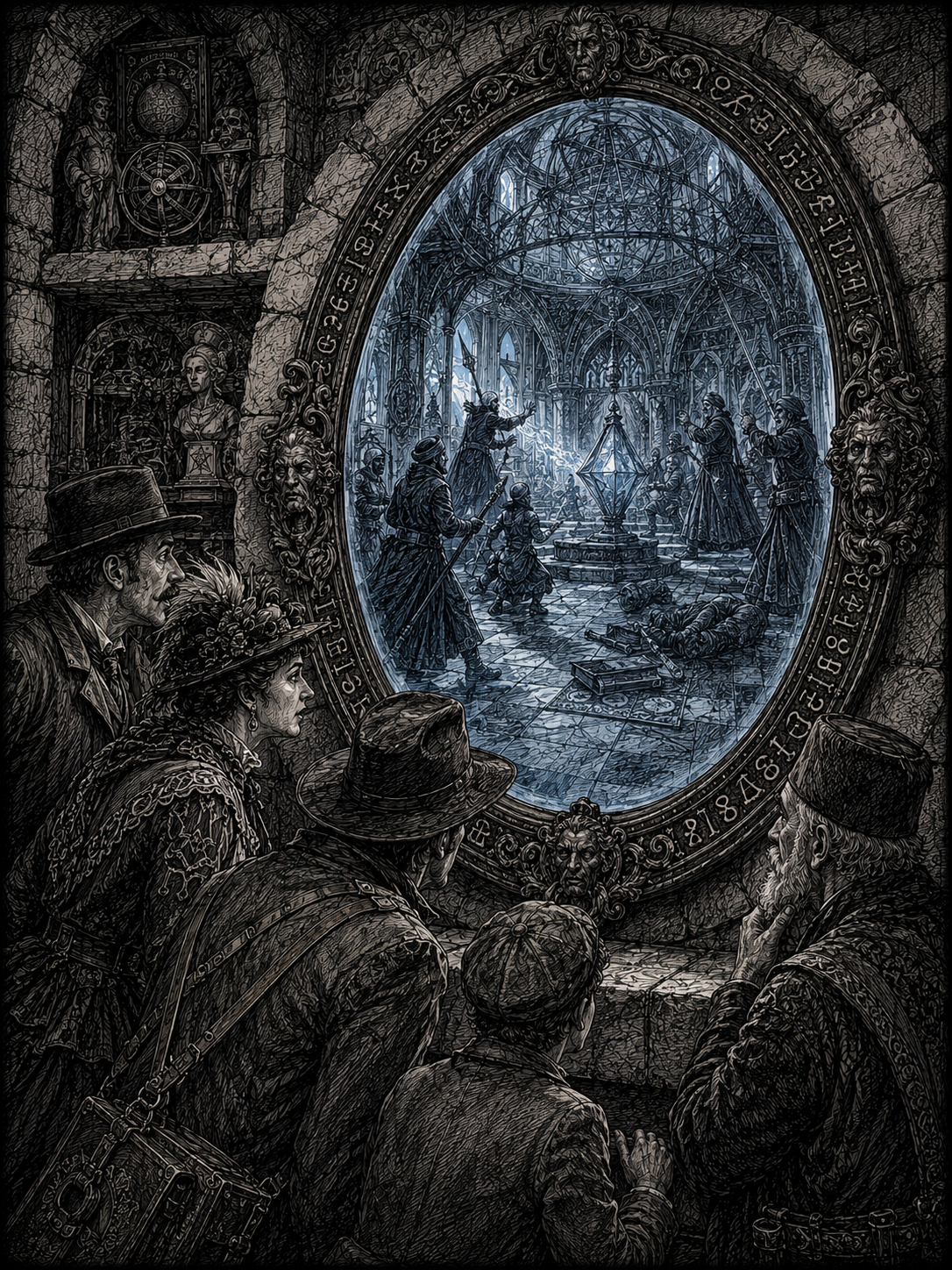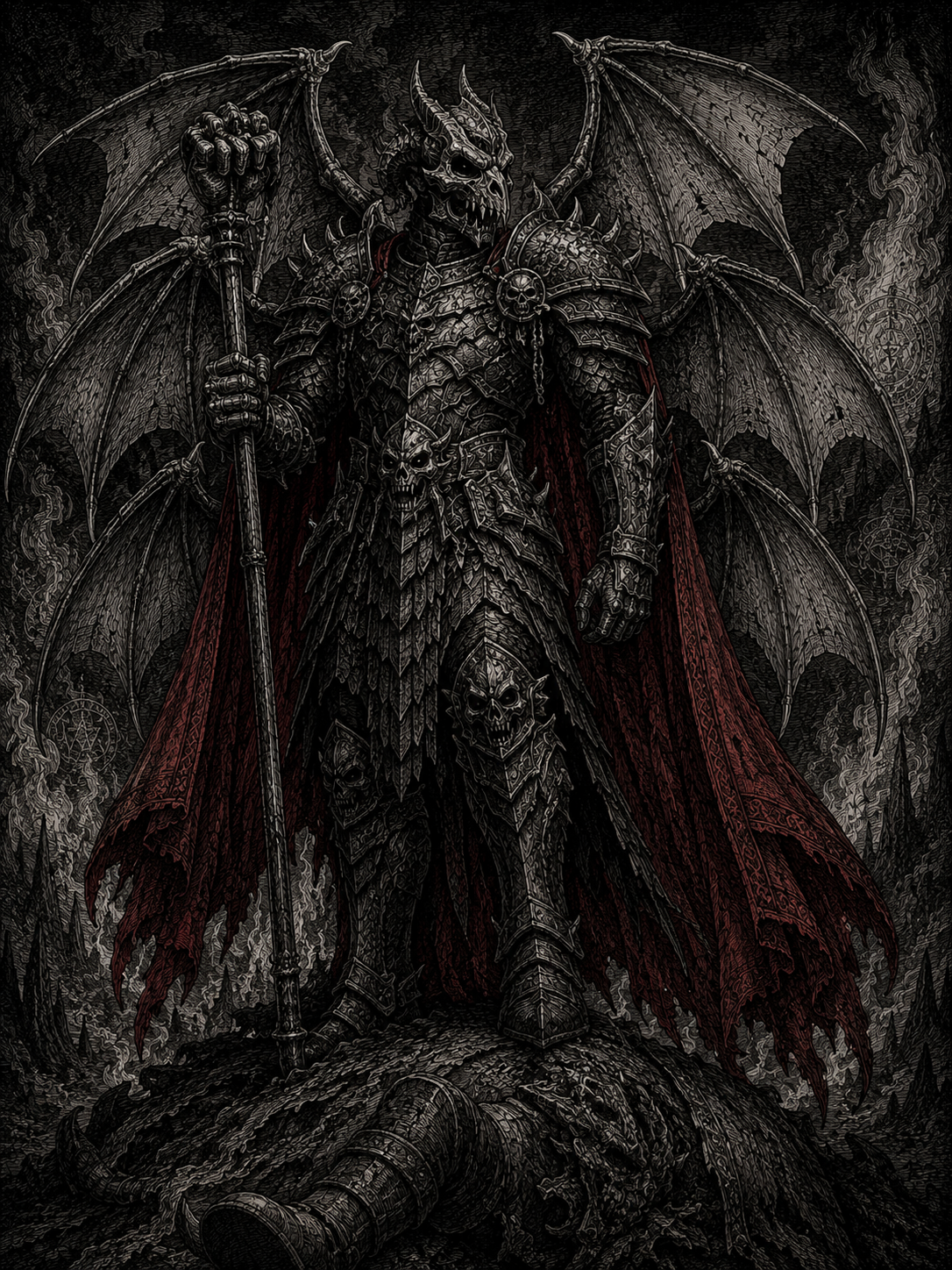
Barbatos is the first Lord of the first hell and gatekeeper of the first stratum, a corrupt druid who suddenly became one of the most powerful creatures of the cosmos. His name is a cult in Isidora and a blasphemy elsewhere.
| Type | Character (infernal power) |
| Other names | First Lord of the First Hell, the Gatekeeper |
| Spanish entry | Barbatos |
Cult and name
In Isidora his cult stands among the ordinary devotions, beside Pelor and Kirios, and his temple, a cathedral, stands opposite the prince’s palace. Elsewhere the name is unholy; one reply to its mere mention was «No oses decir esa palabra impía en mi presencia» (“Do not dare say that impious word in my presence”). How he rose to power is unknown.
Two rules of three govern the name: saying it three times brings no trouble, “for now”; and the command runs «acepten a Barbatos tres veces o perezcan» (“accept Barbatos three times or perish”).
Description
- Eyes: he has “multiple eyes of infinity”. His mark appears in the eyes of his servants; his devotional objects repeat the motif, such as a bracelet of “little eyes”, “a dark ring”. Of one servant it is said: “she comes with the missing eyes”. His severed head is an emblem of infernal punishment for those not of hell.
- Thresholds: he knows the interstitial spaces, “the niches of the sandwich” between dimensions. He became gatekeeper of the first stratum by replacing the power of Tiamat after that stratum’s devastation. His key is a material object, heavier than its size suggests “because it has a charge”.
- Beasts: as a corrupt druid he still charms beasts.
- Fortress: a floating cloud and beautiful garden called “the paradise lost in hell”; seen up close, everything in it is rotten.
Powers and relationships
Under Infernal Resurrection, as long as he remains Lord of this layer he can eventually return to life. He was no great friend of the Baatezu, though he dealt with them more. He is a rival of Kirios (or Quirión) as well as a parallel cult, and is named alongside Apollo in the world’s roster of deities. Durán is said to be “one of his beneficent editions”: two aspects of the same being.
Open questions
- Whether he is a power, god or demon; the records call him deity, cosmic creature and demonic power.
- What his key opens, and who carries it.
- Whether, how and by whom he was defeated, and whether his resurrection has operated.
- Whether the Isidoran cult knows of Durán, and how far the cult extends.
- What the “niches of the sandwich” are.
Gallery