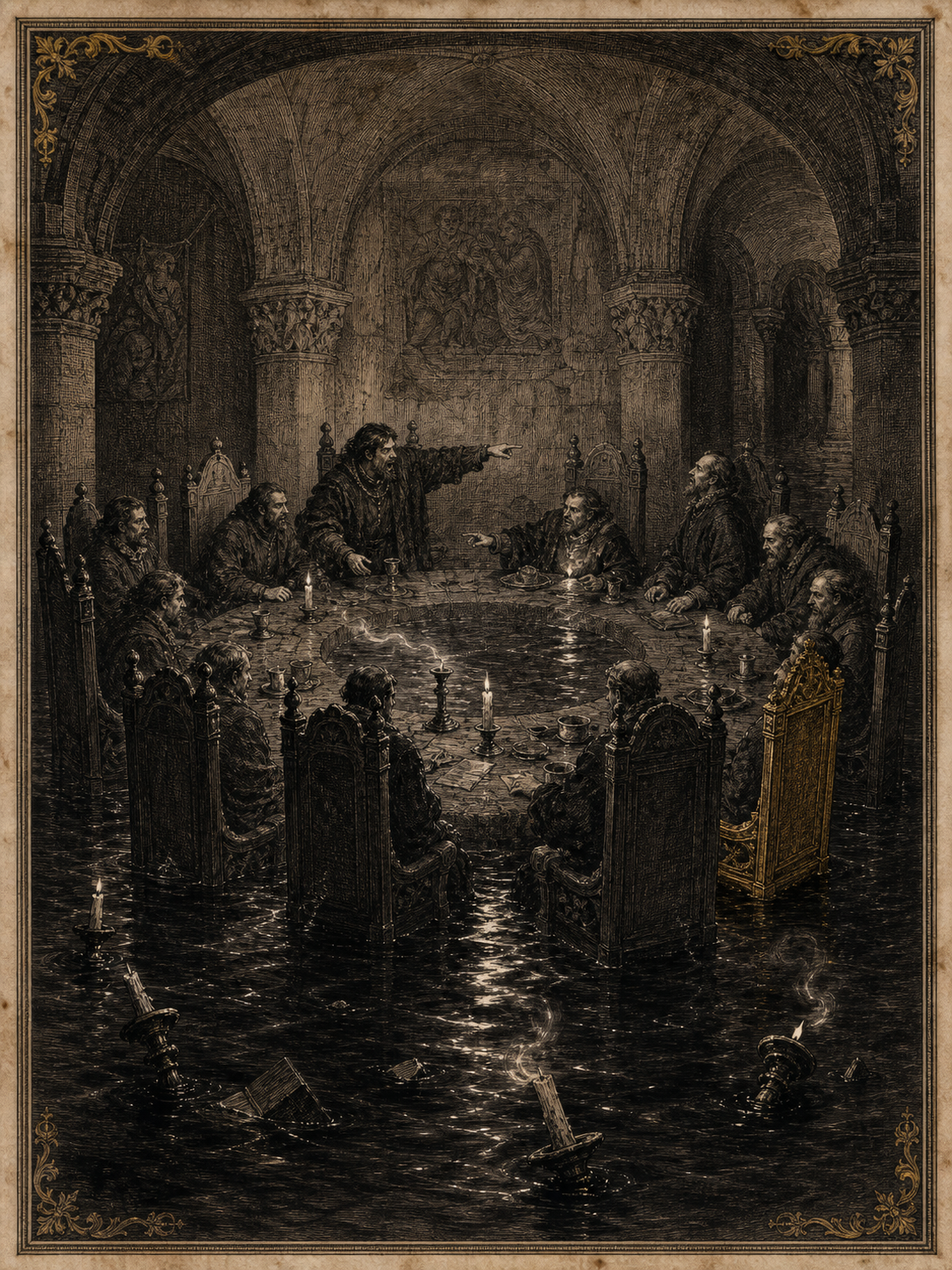
Zaira is a destroyed underground drow city among the Invisible Cities, built in a giant cavern around a central lake; a tribute-paying refuge and the sole source of a unique silk. It “stopped being an invisible city because it stopped being a city”.
| Type | Place (underground city) |
| Spanish entry | Zaira |
Location
Zaira is number 4 on the navigation map, among extinct or mostly extinct volcanic calderas. A road links it to Dorotea via Inzcán: two days by land, a few hours by air (per a figure called the blue girl). Usual access is underground, by path or dock.
Description
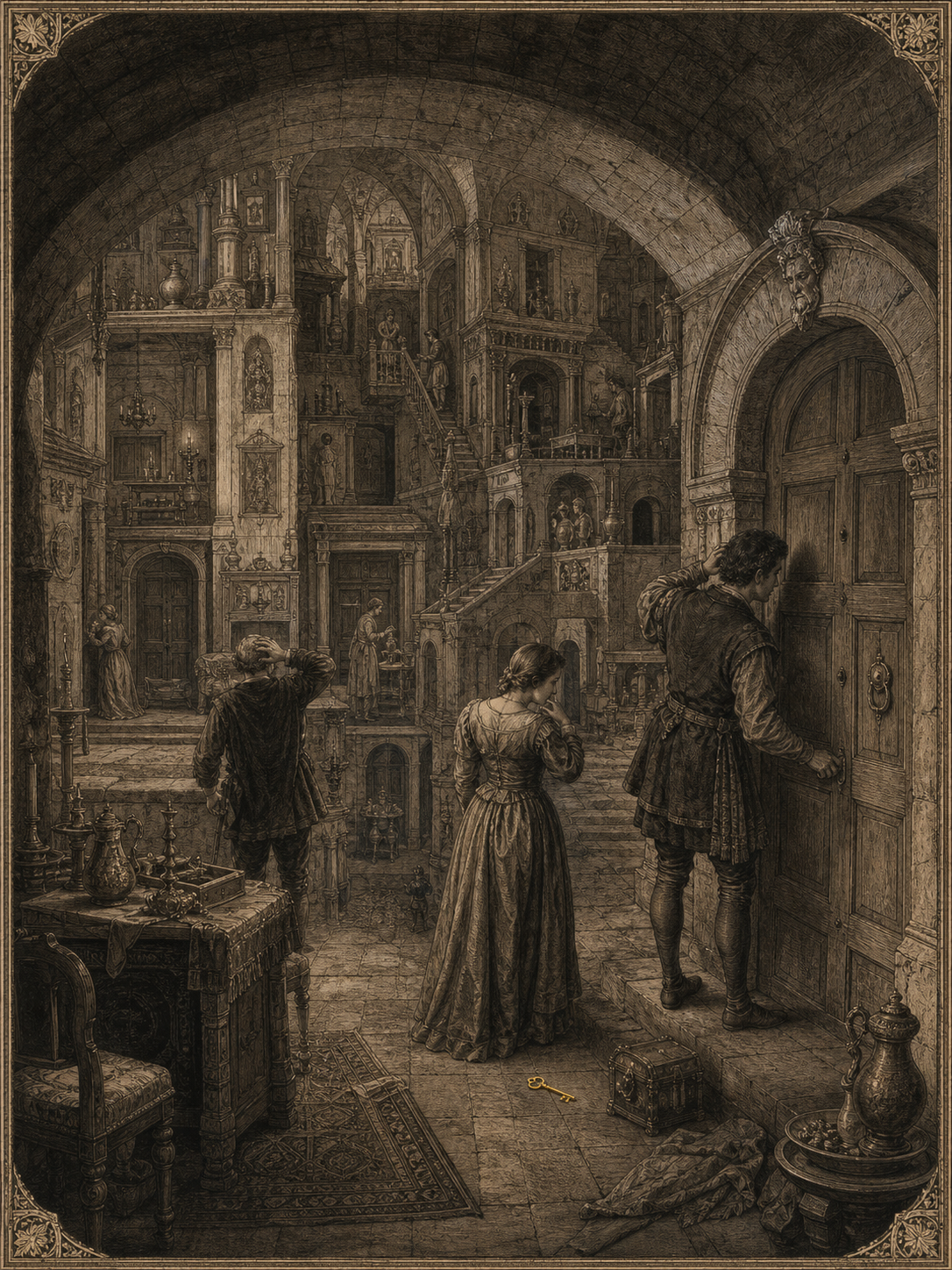
“The city of the worm” lies in a giant cavern, “a kind of alchemical furnace” whose inner chamber can give ultraviolet light. From above it is “the cauldron”: a central lake ringed by cliffs of city, among giant stalactites and stalagmites, outward-jutting “teeth”, a hollow holding lakes, a waterfall, phosphates and domes. Walls are purple under black light; fish carry their own light; windows are violet blown glass; floors are purple worm wax. Streets are stairways with counted steps. The only open area is a plaza built as a reception hall with spectator stands.
The main hall is an underground cathedral with a golden silk carpet “that appeared” and a throne. Guest suites hold perches for familiars and lead bathtubs on spider legs, “where one can, if one wishes, put a corpse, but also take a lovely foam bath”. The temple’s top opens like flower petals.
Government and cult
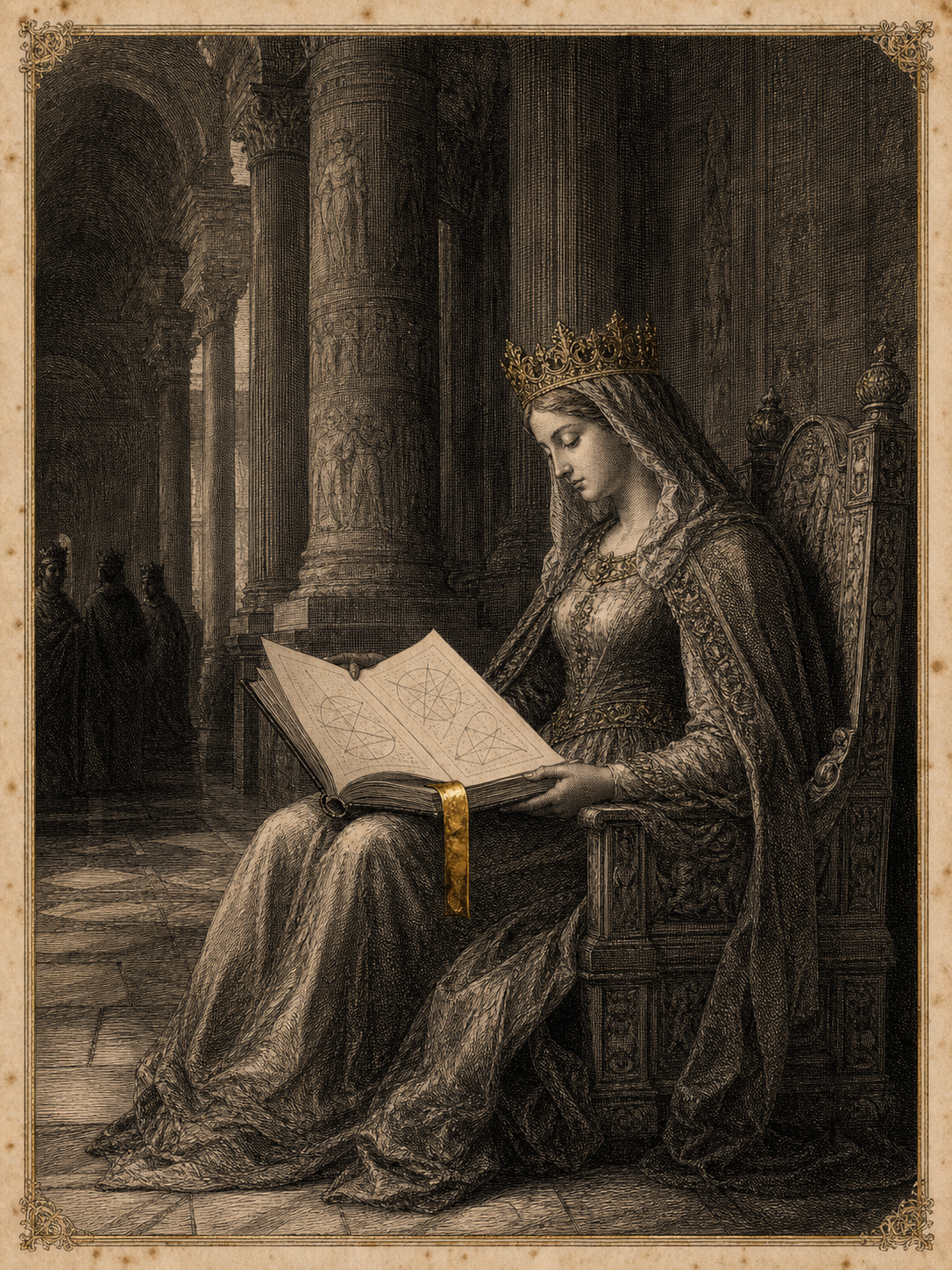
A white-haired drow queen rules from the throne beside her consort, “the lord of the jack”, with three old men and a figure who bars direct access to her. Whip-bearing drow priestesses in black, with “the attitude of a sacrificing priestess”, hold guard and cult; twelve (“6 and 6”) receive visitors. Visitors “of a certain rank” may read a sacred text of cult, creed and dogma. Spore fungi burst in ceremonies; in combat a rope can jerk someone twenty meters up to a stalactite.
The order of six
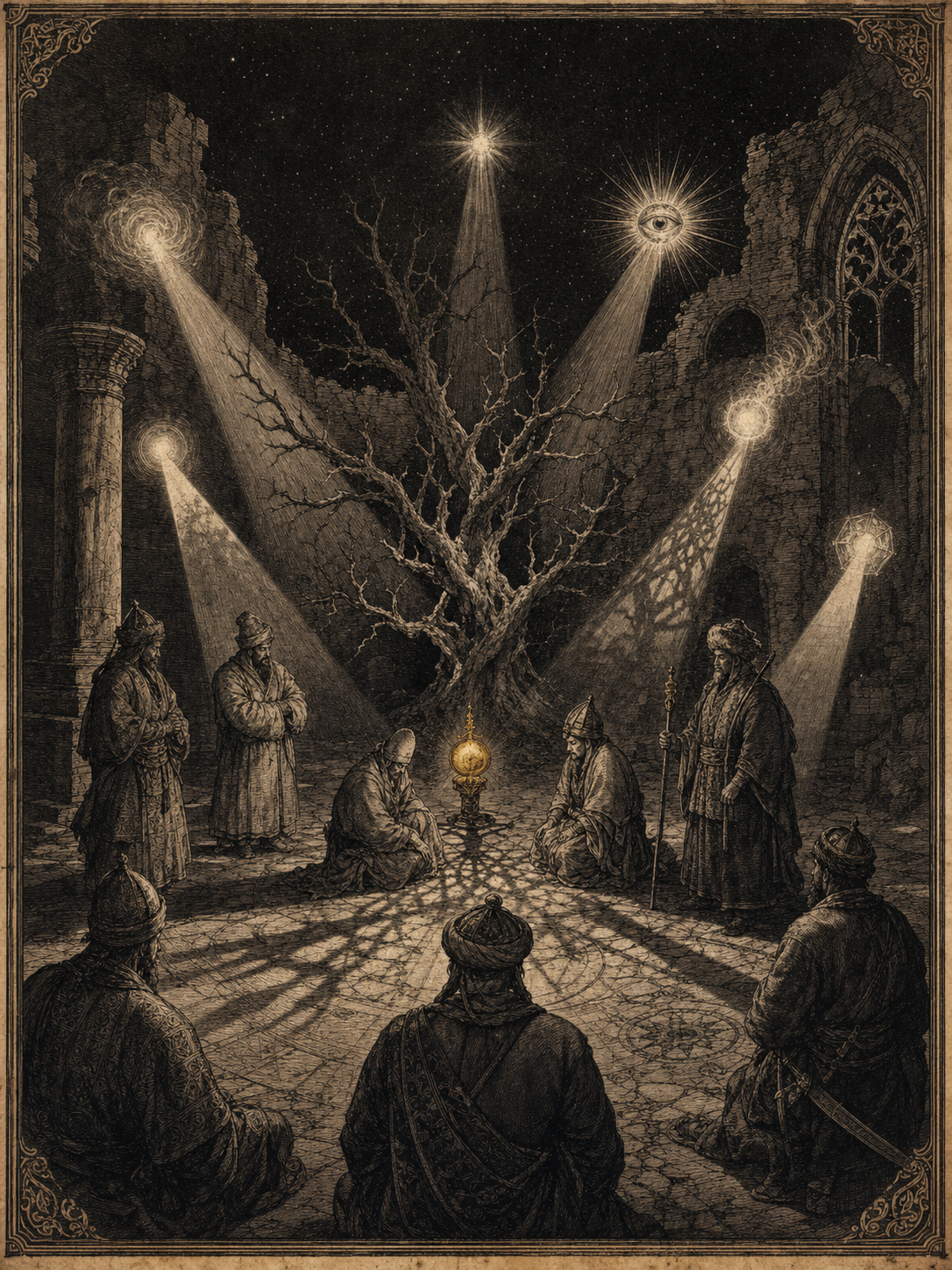
Zaira is “somewhat more tolerant” than other drow cities, and a refuge because it pays more tribute than almost any. Its plaza has a pedestal for six ruby gems (they bounce when dropped), six delegations, six towers and tents colored to match. It holds Games among delegation champions.
Silk and depths
Zaira produces vast amounts of silk “found nowhere in the fields”. Its lake descends in layers to the Styx, black dense waters with a static whirlpool. The city absorbs “people’s actions, violence, love”, holding its past “like the lines of a hand”.
Destruction
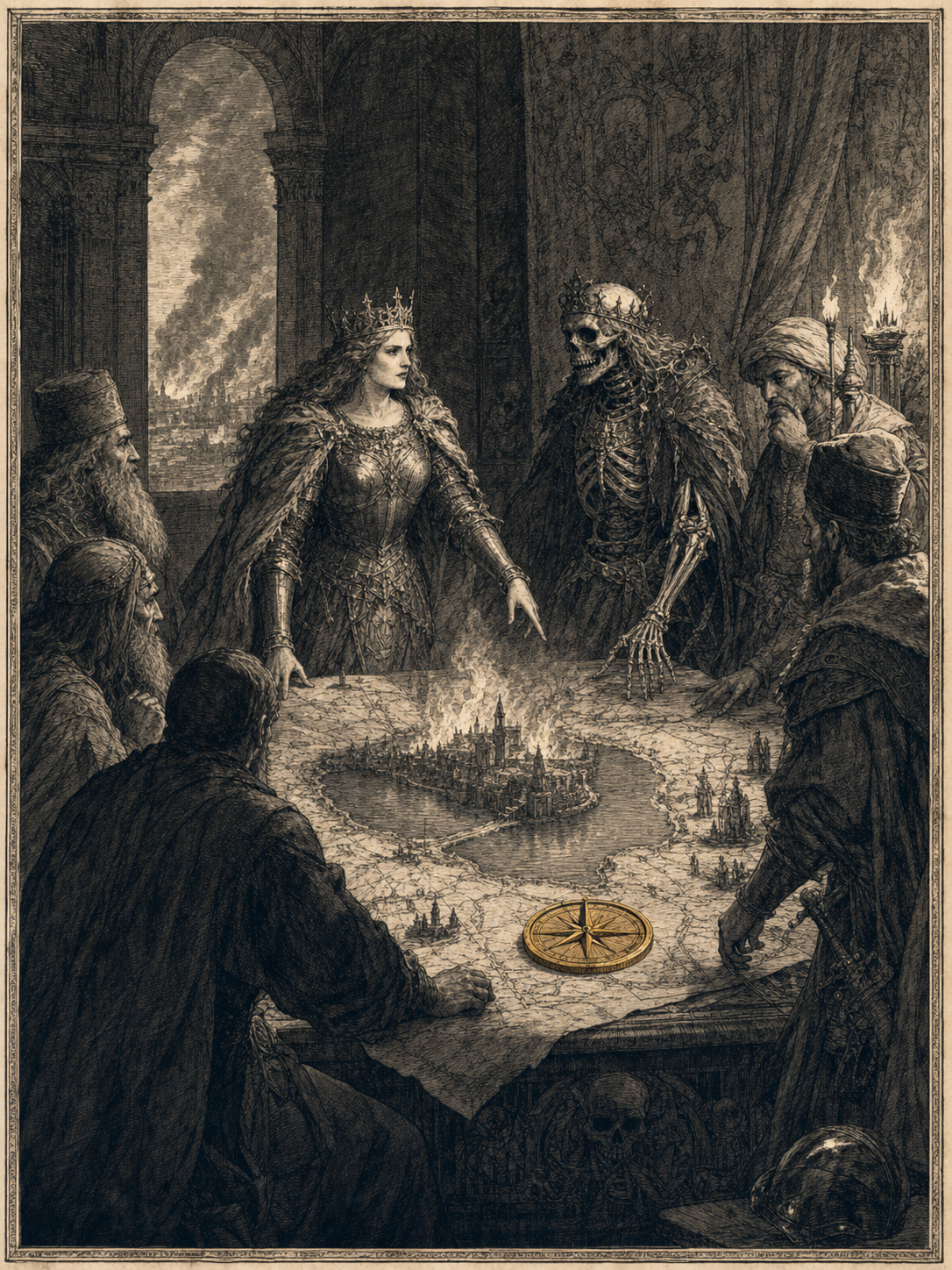
Zaira was consumed, “worn down into oblivion”. Accounts say “we all destroyed it together” and “it was mostly destroyed”, without fixing order or cause; a figure called Manduka was present. There death stopped being cyclical: “it is the end”. The world lost a unique good and a pillar of the tribute system. The Castle of the Prism is said to come from the destroyed city.
Conflicting accounts
- Tents: six (orange, purple, red, blue, yellow, green) plus the visitors’; or seven, the seventh for uninvited high-born guests, colored “brown” or whitish gray.
- Queen’s name: Sara, Zara, Zayra or Zaira, like the city; one sovereign or rival spellings is unresolved.
Open questions
- Who sends the six delegations; what the towers and gems signify.
- Who spins the silk, with which worm; to whom tribute is paid.
- The sacred text’s content.
- Whether the city named the queen or the reverse.
- When the destruction falls relative to the recorded ceremonies and Games.
Gallery