Baphomet is a faceless demonic power served by a sanctuary cult and bound to the origin of the Templars, the most present name in an age lived as “a world infiltrated by demons”.
| Type | Entity (demonic power) |
| Image | Goat-faced statue in lotus position |
| Offspring | Daughter of Baphomet |
| Spanish entry | Baphomet |
Nature
Baphomet has no face (“you yourself are someone who knows, you have no face”). When it manifests it takes no body, only energy: “like trails, like ribbons, perhaps cords”. Its servants say it “is hungry”, possibly for blood or life energy.
Cult
- Statue: a figure “with a goat’s face, not a bull’s”, seated in lotus position on a stone platform at the back of the sanctuary.
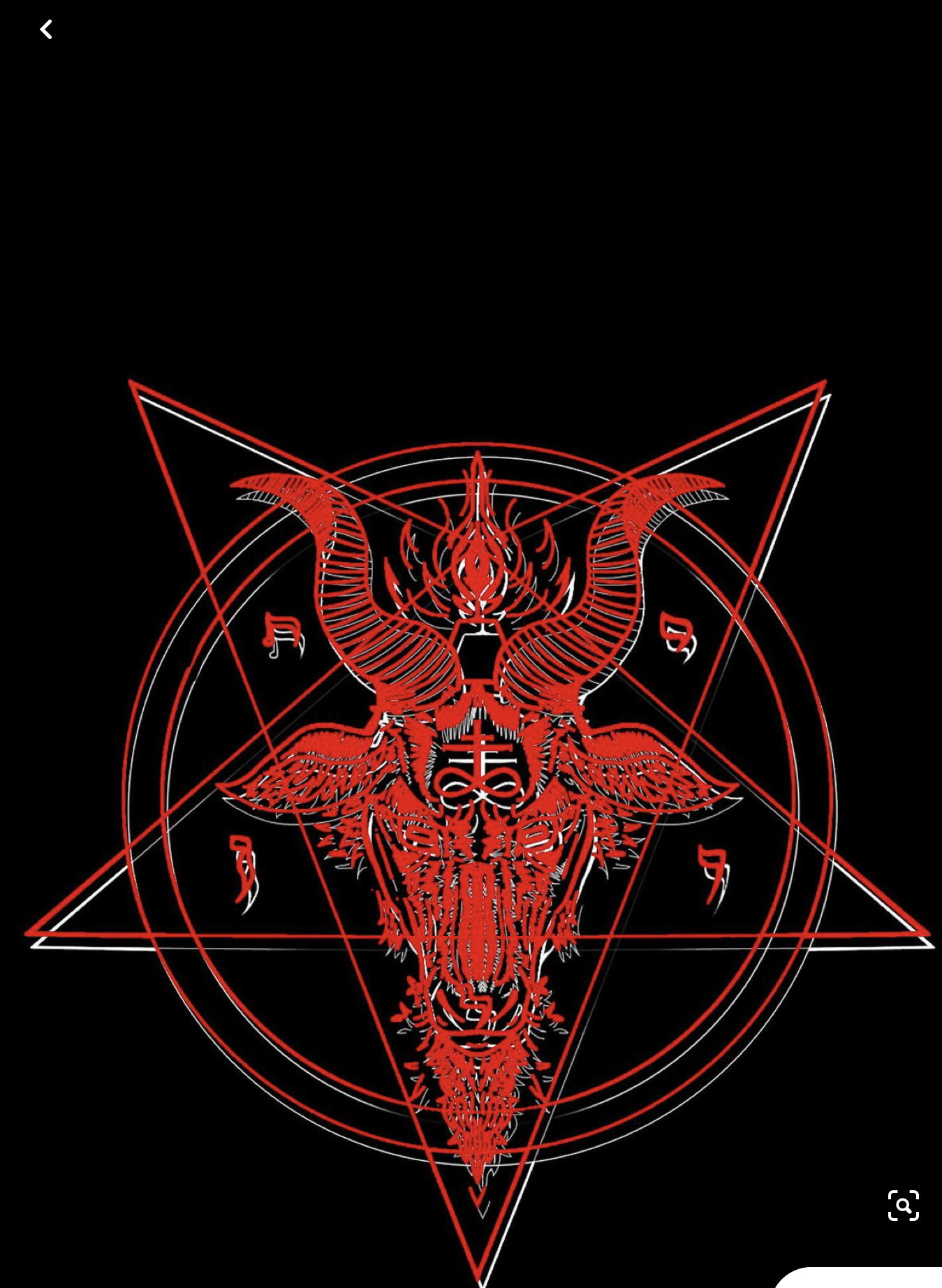
- Symbol: “the demon’s symbol” was found carved on a dead man’s chest with a long red woman’s fingernail; the pentacle is also marked on the forehead.
- Pendant: the impostor wore one.
- Communion: the gatekeeper offers food “so that they take communion”: a special paste, the pasta frola de Baphomet (“Baphomet’s quince tart”).
- Armor of Baphomet: worn by the sanctuary’s dark templars; only its name is known.
The sanctuary has an entrance hall lined with defaced statues of saints and a central chamber lit by red torches. Six Templar knights, three on each side, and the gatekeeper guard it.
Pact
Baphomet heeds rituals and prayers and is paid in souls: Reynaud gave his. Its servants include summonable quasits and, in legend, a scribe; its agents pursue plans in the world, which adversaries thwart. A formal deal between the sanctuary and the order was declared ended.
Templars and foundations
Baphomet is linked to the founding of the Ivory Templars and of Paris. A labyrinth of the Templars in the Ivory hell is tied to it, as is a “labyrinth of Baphomet” from which the Templars originate. An attempt “to cleanse the order of the worship of Baphomet” caused a scandal that split those who called it “the true enemy” from those who held it to be the only salvation of these times.
Lineage and peers
- Its daughter is a humanoid antagonist with the blood of ancient nephilim-type giants and a dimensional capacity: an arm, a wrench, “anything you like” can be put into her.
- In the medieval mythology of the Pilgrims cycle, the “seed of Baphomet” circulates as a heresy.
- It appears as an antagonist alongside Amun.
- Defeating Asmodeus requires two terms, A and B; B is Baphomet.
Conflicting accounts
- Its nature: some associate it with a figure, others call it a spirit, others “an embodied head”.
- The cult’s taboo: one tradition says “for the cult to continue, the false head must not exist”; another, that the false head “must not burn”.
Open questions
- What the false head is, and whether it is the “embodied head”.
- What the paste and the armor are.
- Whether the Ivory hell labyrinth and the labyrinth of Baphomet are one place, and how one enters or leaves.
- The daughter’s name and face.
- Where the sanctuary stands; how Asmodeus and Baphomet relate.
- The pact’s terms, and who ended the deal with the order.
Gallery