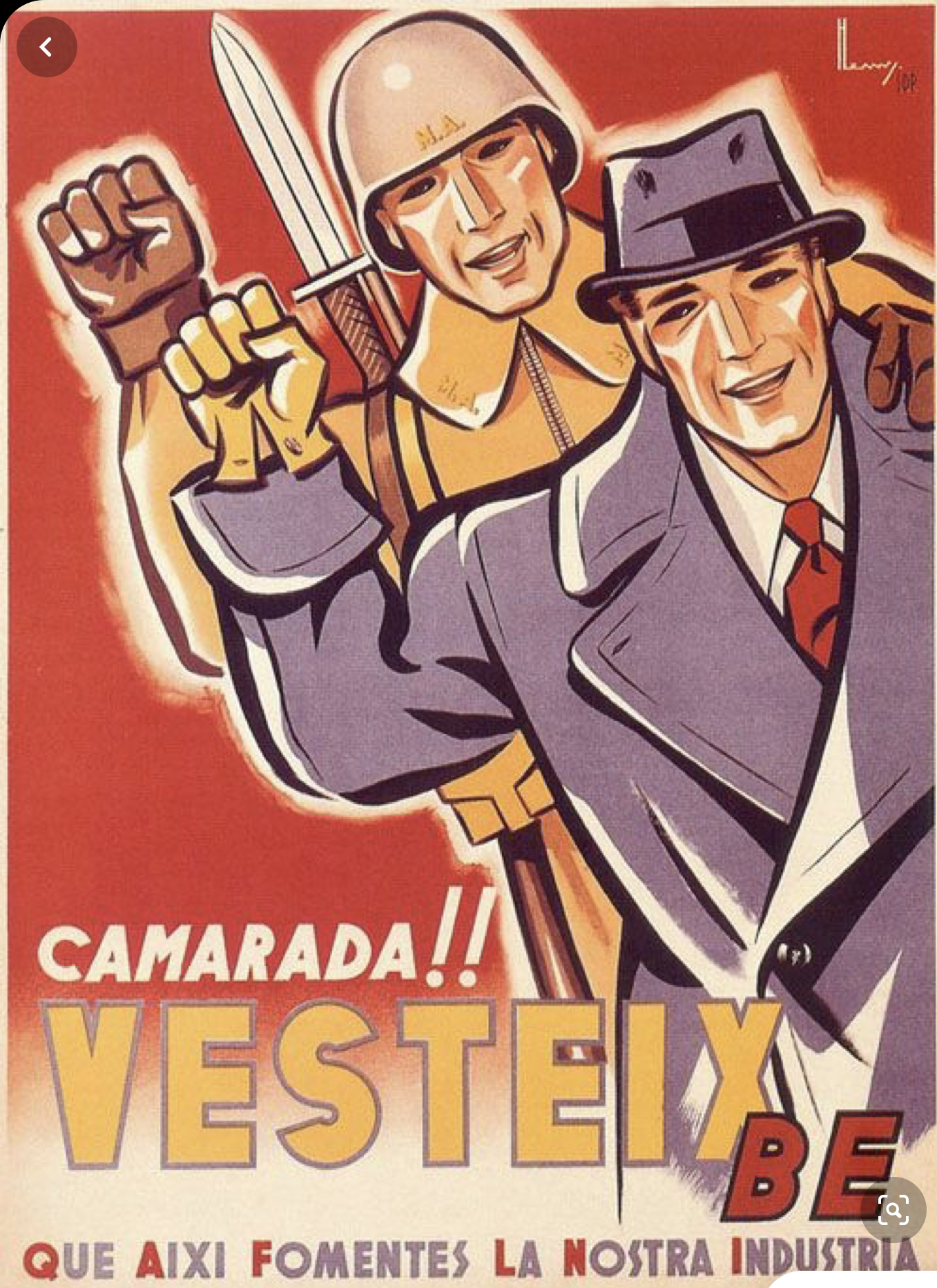
Los Comunados are the revolutionary mass of Uchronic Paris: the insurgent body that returns, with another face, in every age of the city, from the hammer of 1382 to the barricade of 1870.
| Type | Group |
| Spanish entry | Los Comunados |
Incarnations
- The Maillotins, the hammer men of 1382, whose Revolt of the Hammers burns around Montmartre, at the same threshold of time as the Serbian martyrdom of Saint Vitus’ Day (1389).
- The Communards of the Paris Commune (1870) and its barricades.
- Above the ages, Blanqui, the eternal revolutionary, imprisoned in the Prison of the Bull during the Commune; his release by the Time Bandits breaks the planar defenses.
Doctrine
Insurgent legality: there is legality in insurrection too, and insurrection is an end, not a means. Three currents coexist and argue: Anarchism (free association, against unitary government), Utopian Socialism (cooperatives, reform) and Communism (revolution, dictatorship of the proletariat). Claude Nauge, anarchist by banner and utopian in practice, embodies the tension; Kropotkin shadows the libertarian wing.
The Argentine echo
Blanqui’s nickname “Celeste” nods to the light blue of the Argentine flag; through it Río de la Plata anarchism enters the lineage: the FORA, anarcho-communism, southern workers repeating the Commune. The workers’ play staged by the Time Capsules is La Revolución Desconocida (“The Unknown Revolution”). In Eternity by the Stars Blanqui becomes a lunar worm repeating his name: revolution as a cosmic law, star after star. His name has an infernal facet in the Descent, the Duke of Blanquist.
Gallery