The Holy Land is the sacred region of the great religions of the book and the final destination of the Genoa–Sicily–Holy Land route. In July 1300 it is a mosaic of mutually distrustful fiefs, a military frontier, a trade node and a reserve of relics.
| Type | Place |
| Date | July 1300 |
| Spanish entry | Tierra Santa |
Description
The route stops once, in Sicily, then reaches Cyprus and the Syrian coast, which lacks ports and landing places.
Populations are rebuilding after perhaps two hundred years of war; the crusader territory, Jerusalem and its land, was founded about twenty years ago. Travelers keep to the crusader side. The lords of the Holy Land meet in Decapolis, to which the Templars send ambassadors; the Templars have at least one church in the region (“our church in the Holy Land”).
The inland road
“Difficult terrain” requires speed and escort. The journey goes in stages: coast, interior, the Horns of Hattin, and a dark forest on the outskirts “that at first did not look like a forest”. Wadis make travelers feel stalked. In places the sand has turned mirror-like; it cracks under weight and “suddenly there is a hole”.
Landmarks
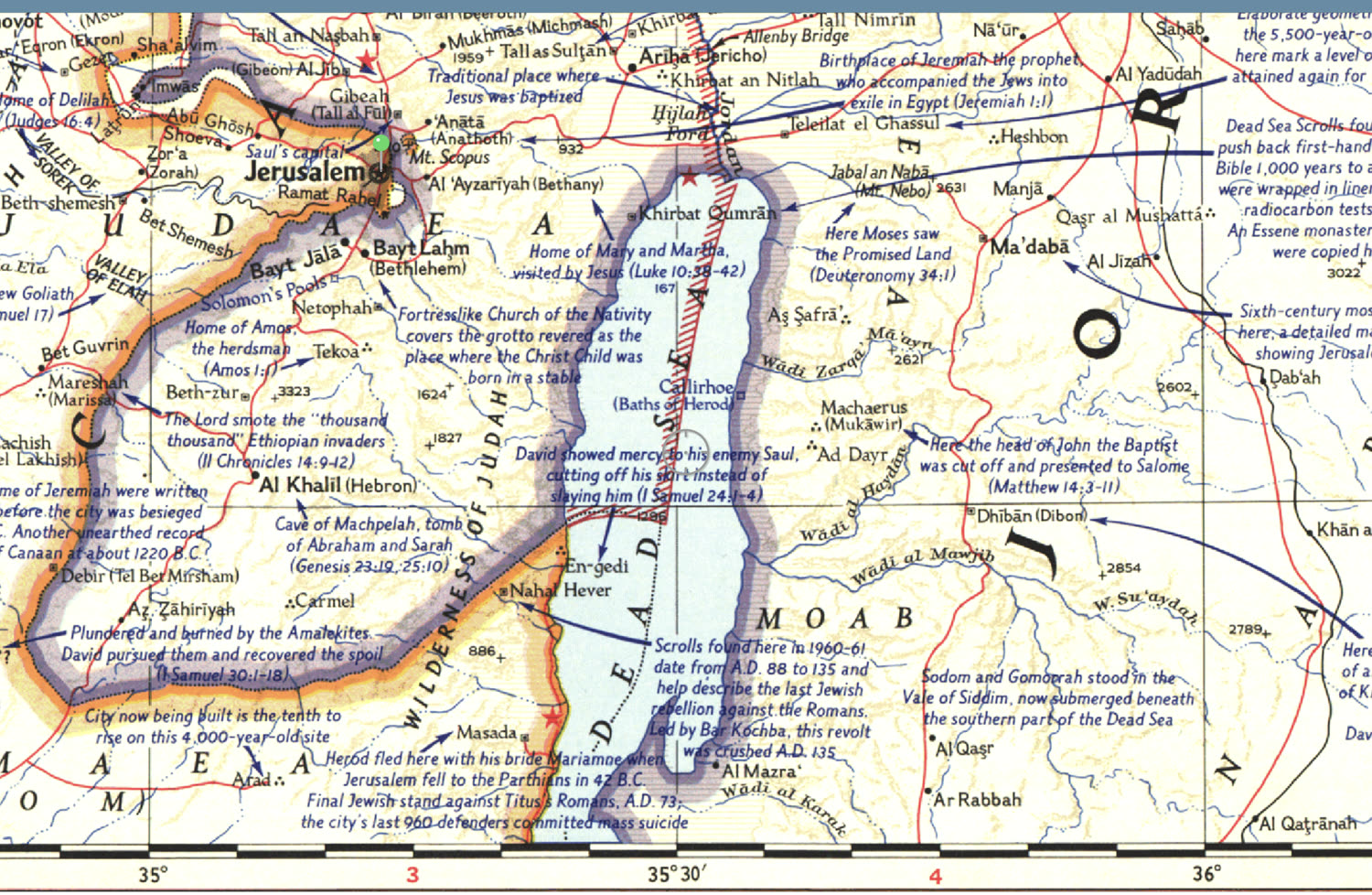
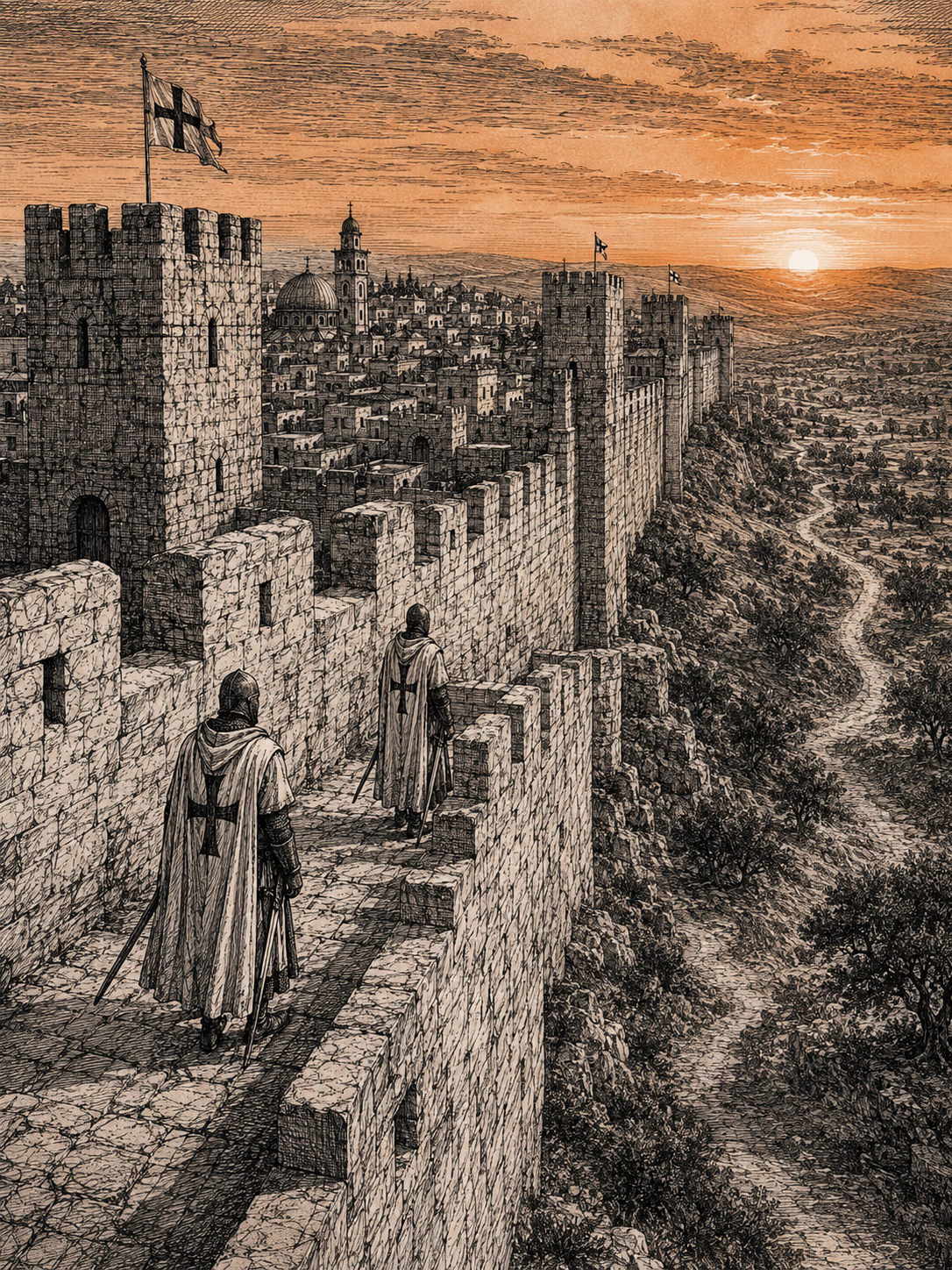
The Springs of the Jordan, Mount Hermon and Kadesh in the north; Nazareth, city of the Sea of Galilee; the Horns of Hattin; Judea with Jerusalem, the Jordan, Jericho, Gezer and the Herodium; the Nabataean zone to the southeast. In Jerusalem the Temple of Solomon stands damaged and “all silent at this moment”.
Role
- Frontier: two centuries of war, and now pressure from Mongol Turks and Chinese Turks in conflict with the Mamluks.
- Trade: a trading post off the Syrian coast, even on an islet, is sought for the Silk Road.
- Relics: the Shroud, sought by the Knights, and the fingernails of Saint Cecilia, which with other things protect the Cronomicón.
All fiefs depend on one corridor to Europe, the County of Edessa: if it falls, “we are isolated in the Holy Land”. The invocations Dante made unwillingly contaminate Federica’s politics. It is the goal of the expedition; after the conflict “they have the whole city and the whole Holy Land”.
Conflicting accounts
- A mosaic of fiefs controlled by crusaders.
- “Taken over mostly by the Moors.”
- “At this moment conquered by hell.”
Open questions
- The number of fiefs, their lords, and the authority of the Decapolis meeting are not recorded.
- Where the Templars’ church is, and what damaged the Temple, are unknown.
- Whether the trading post was established is not recorded.
- Whether the cracking sands are natural, infernal or a trap, and what the forest is, are unknown.
Gallery